Do Try Visit
Zhangjiajie
DoTryVisitKnow
Pick a city
Do Try Visit

The honest city guide. Ranked by the crowds who went, never by who paid.

Cities

  • Dubai
  • Istanbul
  • London
  • Paris
  • Bangkok
  • New York City
  • Singapore
  • Hong Kong
  • Rome
  • Barcelona
  • Tokyo
  • Kuala Lumpur

The fine print

  • How we rank
  • FAQ
  • Credits and sources
  • Community guidelines
  • Terms · Privacy

© Do Try Visit. Map data © OpenStreetMap contributors, tiles by OpenFreeMap. Photos from Wikimedia Commons, credited where shown. Facts from Wikidata, Wikivoyage, Wikipedia and official travel advice: see credits. 3D icons: Microsoft Fluent Emoji (MIT).

  • In this city

  • Cities

Zhangjiajie/Know

The story of the city

Get to know Zhangjiajie

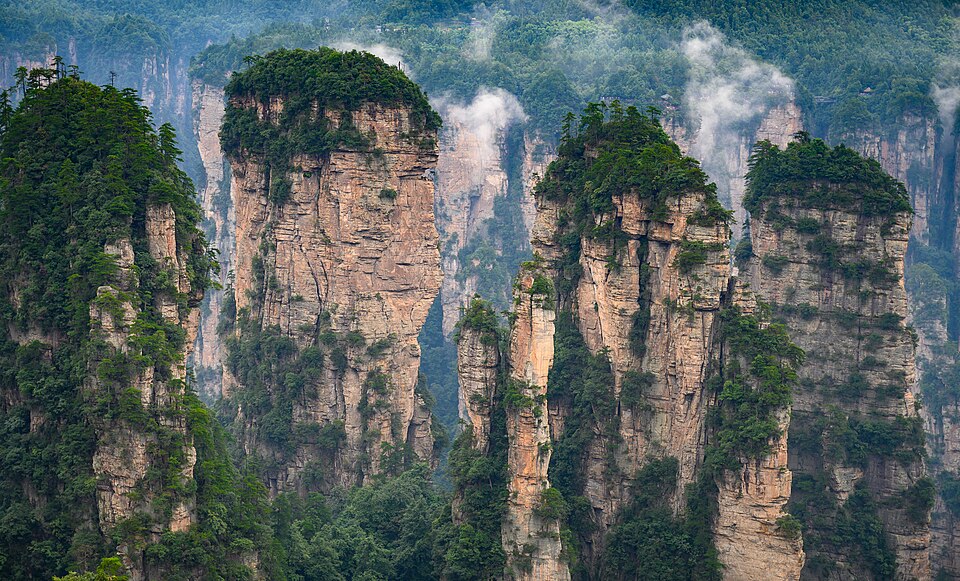
Zhangjiajie is a Hunan city that people visit for what surrounds it: more than 3,000 sandstone pillars at Wulingyuan, and the cliffs of Tianmen Mountain, which a cable car climbs straight from town. The city is the base, with a spicy local stew and Tujia culture to go with the scenery.

Give it up to four days if you want to hike Wulingyuan properly, since its ticket is valid for four days. Tianmen Mountain is a separate ticket and a separate outing.

Best months
Sep–Nov
Language
Putonghua
Money
renminbi
Emergency
119 fire · 110 police · 120 ambulance

Contents

  1. Known for
  2. History1 min
  3. Culture and local life1 min
  4. When to go
  5. Areas
  6. Day trips
  7. Practical

Checked Nov 2026

  1. Known for
  2. History
  3. Culture and local life
  4. When to go
  5. Areas
  6. Day trips
  7. Practical

Known for

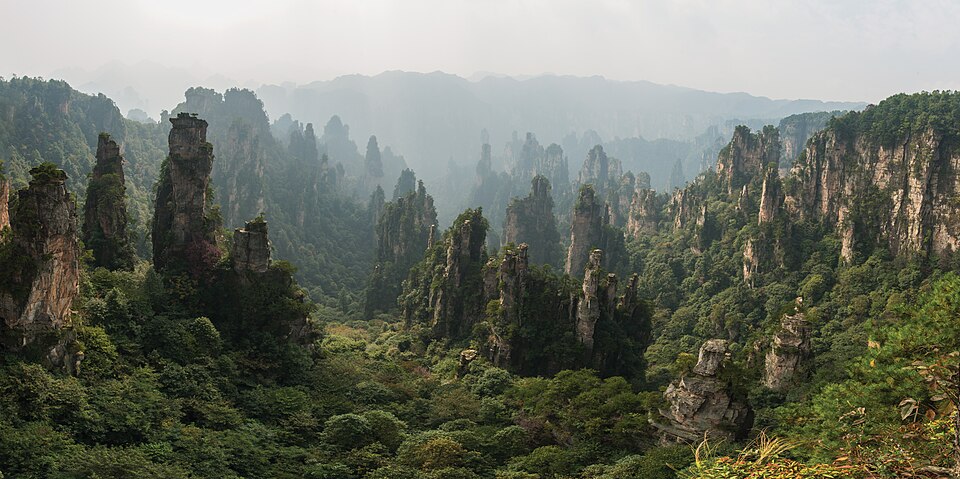
  • NatureThe Wulingyuan sandstone pillarsMore than 3,000 sandstone pillars make up the landscape here, and it is UNESCO-listed. The core covers the forest park, the Suoxi valley, and the Tianzi and Yangjiajie sections. One ticket covers four days, so spread your walking out.
  • NatureZhangjiajie National Forest ParkThe park takes its name from a small village inside it, and the whole city took the name from the park in 1994. Enter by real-name registration with an ID card, passport or face scan. The eco shuttle buses are covered by the ticket, but the cable cars and the Bailong Elevator cost extra.4.6(40.5K)
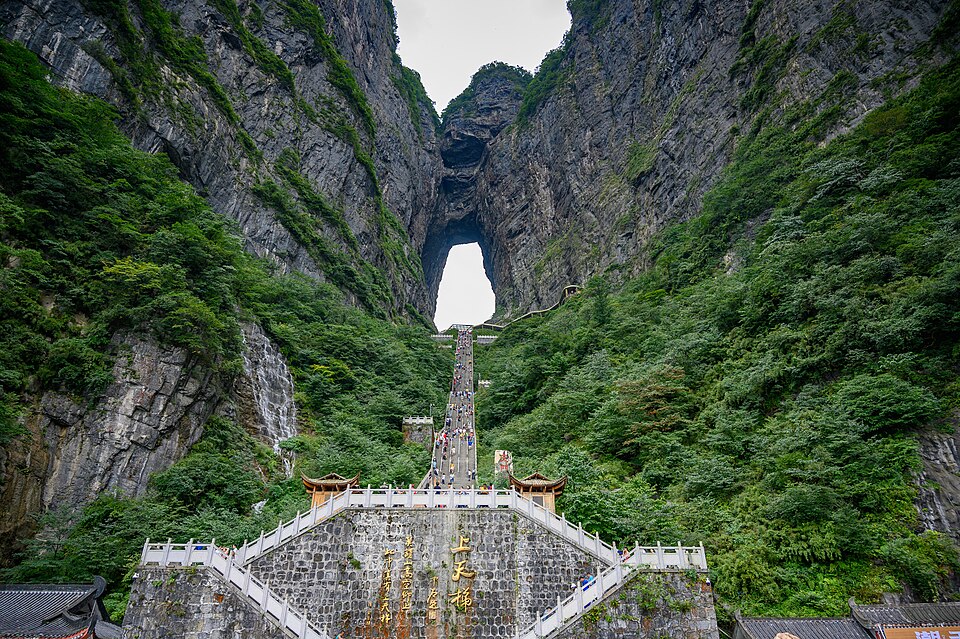
  • SightTianmen MountainThis is the highest mountain in Yongding District, and a cable car carries you up from the edge of the city to a flat summit. The sights are the clifftop walkways and Tianmen Cave, a huge natural arch near the top. Buy your ticket at the cableway station on Dayong Road.4.6(55.5K)
  • SightTianmen CaveThe arch gave the mountain its name, Heaven's Gate. A tradition says it opened wide and glowed in 263, which a ruler of the state of Wu read as a good sign.
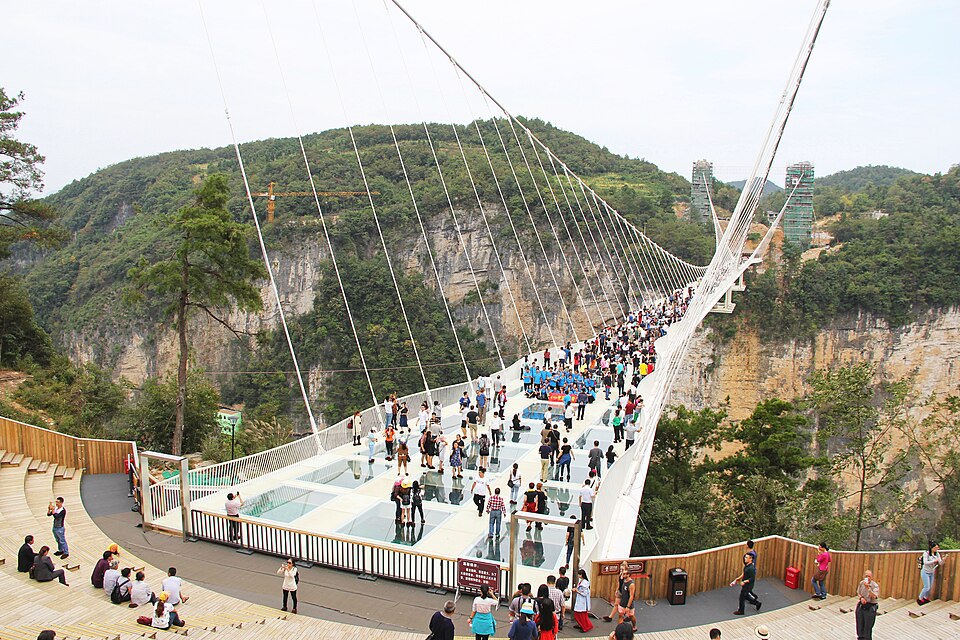
  • SightGrand Canyon glass bridgeThe Zhangjiajie Grand Canyon has a glass bridge of its own. It is a separate scenic area from Tianmen Mountain, so it needs its own ticket.
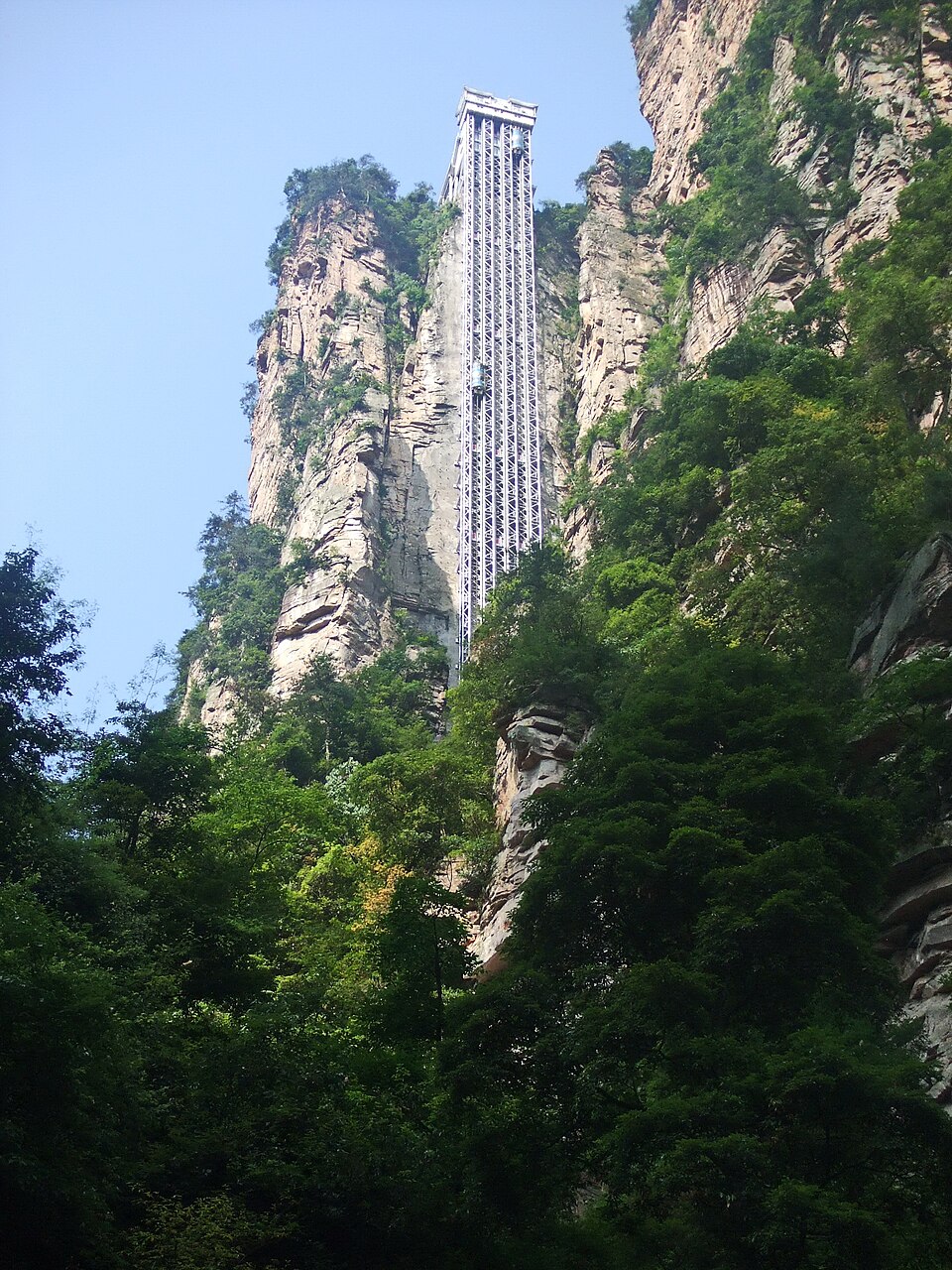
  • ExperienceGolden Whip Stream and the Bailong ElevatorA gentle 4 km trail follows the valley floor along Golden Whip Stream, and at its end the Bailong Elevator lifts you to the plateau. Queues there are long at peak times and short after about 16:00.
  • NatureHuangshizhaiA cable car takes you up, and a loop around the summit takes roughly 100 minutes. After it you can walk down to the stream trail below.4.6(90)
  • FoodSanxiaguoThe local signature dish is a spicy meat stew whose name means three-into-the-pot. A small pot feeds two, and it is not for people who like mild food. Yinmandou and Hushifu both serve it, and Hushifu is known for it.
  • DrinkBerry teaMéichá is a specialty of Yongding District. You can buy it in a shop, or order it online for delivery.
  • CraftTujia cultureA large park is devoted to the local Tujia people, with performances, exhibitions, food and shopping. It is a short drive from both the airport and the railway station.4.3(439)

History

1 min read

People have lived along the Li River for a very long time. In Cili County, archaeologists found more than 20 pieces of fired pottery about 10,000 years old, and in Sangzhi County a black clay pot with a distinctive pattern of the same age. At that time it was the most advanced pottery firing in China.

That early culture faded. Steep mountains made farming hard, and neither roads nor river transport were developed, so the region stayed remote. Outsiders labelled the people here rude southerners. That says more about the writers than about the Tujia and their neighbours.

Written records begin in 221 BC. In 263 a ruler of the state of Wu gave the nearby mountain a new name, Tianmen, meaning Heaven's Gate, after a cave in its side that was said to have opened and glowed.

The name Zhangjiajie is much younger than the town. It means roughly the Zhang family's homeland. The official story ties it to Zhang Liang, a Han dynasty adviser who is said to have settled here to escape a suspicious emperor. A second line comes from the Ming: during the reign of Hongzhi, the court gave a local commander, Zhang Wancong, the mountain land around today's forest park as a fief.

The city was long Dayong. In 1988 it gained prefecture-level status, which brought the forest park within its borders. UNESCO listed the area in 1992, and in 1994 the city took the name Zhangjiajie to raise its profile. The old name survives on the map: the Dayong Road cableway station for Tianmen Mountain is one place you will pass it.

Tourism now drives how the place is connected. An expressway links the city to the provincial capital, Changsha, and a second railway station, Zhangjiajie West, opened in 2019. Changsha is about two hours away by high-speed train.

  1. About 8000 BC · People in Cili and Sangzhi fire pottery, the most advanced technique in China then.
  2. 221 BC · The start of the area's recorded history.
  3. 263 · Sun Xiu of Wu renames Tianmen Mountain after its gate-like cave.
  4. 15th century · Puguang Chan Temple, a Chan Buddhist temple in Yongding, dates from this century.
  5. 1488 to 1506 · During the Hongzhi reign the Ming court gives Zhang Wancong the mountain land around today's forest park.
  6. 1988 · Dayong becomes a prefecture-level city.
  7. 1992 · UNESCO lists the Wulingyuan area as a World Heritage Site.
  8. 1994 · Dayong is renamed Zhangjiajie.
  9. 2019 · Zhangjiajie West railway station opens.

Culture and local life

1 min read

The Tujia are the local people, and the city has a language of their own in its name: in Tujia it is written Zanxjiaxgaif. The Tujia Folk Customs Park, with performances and food, is the easiest place to meet their culture.

Food here is spicy, and it comes in pots. Sanxiaguo is the dish to order, and Yinmandou adds sauerkraut beef and spicy roasted yellow beef to the list. For cheaper meals look at noodle shops: Jiawang Snacks on Jiefang Road sells beef noodles for about ¥10. Yongding also has its own tea, a berry tea.

Eating well is easier in the city than in the mountains. Eating inside the scenic areas means a short menu and inflated prices, so carry snacks and water. Back in town, Qindama opens from 08:30 to 01:30, and the riverside makes a good walk afterwards. The main snack street is the People's Square pedestrian street.

When to go

The climate is humid subtropical, and the rain comes mostly between May and August. July is the wettest month, with 226.9 mm, and among the hottest, with highs of 33.5 °C. Town can touch 39°C in summer, while the mountains run 5 to 10°C cooler.

Go in spring or autumn. April has highs of 23.4 °C and 125.5 mm of rain, while October is warmer than April on the low end and drier, at 94.5 mm with highs of 23.3 °C. November turns cooler, with highs of 17.9 °C and 64.2 mm.

Winter is cold but dry. January has highs of 9.5 °C and lows of 2.9 °C, and December gets just 26.9 mm of rain, the least of any month. Tianmen Mountain keeps shorter hours in winter, 08:00 to 16:30 from December to February. In summer, take sunscreen, and a long-sleeved layer if you stay overnight on a mountaintop.

Crowds gather at the National Forest Park gate around 08:00 to 09:00 in peak season. Arrive earlier or later to skip them. The Bailong Elevator queue shortens after about 16:00.

Best months: Sep–Nov

JFMAMJJASOND
Highs 10–34°C, lows 3–24°C. Highlighted: the best months.

Areas

Yongding District →

This is the main urban area, and most visitors land here first. The city's museum, the Puguang Chan Temple and the Tianmen Mountain cableway are all in it. Zhangjiajie Museum is free and closes early, at 16:30. Puguang Chan Temple charges ¥40 and dates from the 15th century.

Wulingyuan →

Wulingyuan is the town next to the scenic area, north of the city. Sleeping on the plateau inside the park saves travel time. Tianzi Street, a shopping plaza with many shops for comparing prices, a supermarket and a cinema, is the place to stock up.

Tianmen Mountain

Tianmen Mountain sits south of the city centre, close to Zhangjiajie railway station and the central bus station. The cableway starts at Dayong Road and the ticket includes the round trip and the shuttle at the top.

Cili County →

Cili County is one of two counties the city administers. The Grand Canyon, with its glass bridge, is here and needs its own ticket. Archaeologists have also found Stone Age relics here.

  • Wulingyuan District 11
  • Chongwen 10
  • Dayongqiao 8
  • Yongding 7
  • Zhangjiajie National Forest Park/Wulingyuan 5
  • Guanliping 3

Day trips

Tianmen Mountain

Cable car from the Dayong Road station, south of the city centre

A cable car climbs from the city to a flat summit, with walkways along the cliffs and a view of Tianmen Cave. Hours are 07:30 to 16:00 from March to November, so start early.

Wulingyuan

Bus from the central bus station or the West railway station · worth a night

The sandstone pillars are the main event, and a proper visit takes more than a day. Day one covers Huangshizhai, the stream trail and the Bailong Elevator. Day two is Yangjiajie and then Yuanjiajie. Later days go to Tianzi Mountain or the quieter corners.

Maoyan River and Jiutian Cave

In Sangzhi County, in the west of the prefecture

This long scenic area lies in the west of the prefecture, in Sangzhi County. Come for a cave, a canyon, rafting and an old village, all in one area.

Changsha

High-speed train, about 2 hours · about 2 h · worth a night

The provincial capital is about two hours away by high-speed train, and an expressway links the two cities.

Practical

Emergency

119Fire110Police120Ambulance

Safety

UK advice: No warnings

US advice: Level 2, exercise increased caution

  • UK and Canadian passports get 30 days visa-free until 31 Dec 2026; check your nationality, or get a visa first
  • 240-hour visa-free transit (57 nationalities) works via Zhangjiajie airport, with an onward ticket to a third country
  • Carry your passport: trains, park tickets and hotels all go by it, and police won't accept copies
  • Hotels register you with the police at check-in; book one that says it takes foreigners
  • Tea-house scam: friendly strangers invite you for tea or drinks, then a huge bill arrives
  • Restaurants inside the park can overcharge; check prices first, and eat outside the gate for less

Power

Type A, C, I · 220 V

Bring an adapter unless your plugs are type A or C or I.

Money

renminbi (CNY)€1 = 7.31 CNY · $1 = 6.67 CNY

  • Set up Alipay and WeChat Pay before you fly, linked to a foreign card; cards are rarely taken directly
  • WeChat Pay takes Visa, Mastercard, Amex, JCB and more, with no 3% fee on payments under ¥200
  • Refusing yuan cash is illegal, though a few places still do; carry some small notes
  • Fake ¥100 notes circulate, even from ATMs, and banks won't replace them

Getting there

Zhangjiajie Hehua International AirportDYG

  • TaxiTaxi to the centre is a short metered ride; use the rank, not car-park touts who skip the meter15 min · ¥16–40
  • BusCity bus 4 from the stop just before the airport gate to the bus station and railway station60 min · ¥1–2
  • BusNo direct bus to Wulingyuan: take bus 4 to Central Bus Station, then a tourist bus90 min · ¥15

Getting around

  • Tourist buses to Wulingyuan leave Central Bus Station every 5–10 min; about 45–60 min, ¥12–13
  • Bullet trains use Zhangjiajie West, outside town; buses link it to the centre and Wulingyuan
  • Book trains in the Railway 12306 app or on Trip.com; you need your passport to buy and board
  • Apps: Amap (English version) for maps and buses, DiDi (in English) to call a taxi
  • Insist on the meter in taxis, or use DiDi; ask for a receipt
  • Park shuttle buses are free with the Wulingyuan ticket; cable cars and Bailong Elevator cost extra

Traffic drives on the right.

Staying connected

SIM and eSIM: China Mobile, China Unicom, China Telecom

  • Roaming or an eSIM from home keeps Google, WhatsApp and Instagram working; local SIMs and Wi-Fi block them
  • China Mobile and China Unicom sell tourist SIMs; bring your passport to register one
  • Google, YouTube, Facebook and X are blocked on Chinese networks

Country calling code +86.

Language and manners

Spoken officially: Putonghua

Sources

Wikidata · Nov 2026UK Foreign, Commonwealth & Development Office · Aug 2026U.S. Department of State · Oct 2026Wikipedia · Oct 2026European Central Bank reference rates · Nov 2026
Checked Nov 2026 against 9 sources, 5 official
  • Beijing Municipal Government12
  • Hunan Provincial Government
  • National Immigration Administration
  • People's Bank of China
  • UK Foreign, Commonwealth & Development Office12
  • Lonely Planet
  • Travel China Guide
  • Wikipedia12
  • Wikivoyage1234
6 photos from Wikimedia Commons
  • The Wulingyuan sandstone pillars: chensiyuan, CC BY-SA 4.0
  • Zhangjiajie National Forest Park: chensiyuan, CC BY-SA 4.0
  • Tianmen Mountain: xiquinhosilva, CC BY 2.0
  • Tianmen Cave: xiquinhosilva, CC BY 2.0
  • Grand Canyon glass bridge: HighestBridges, CC BY-SA 4.0
  • Golden Whip Stream and the Bailong Elevator: Nyx Ning, CC BY-SA 3.0
  • Zhangjiajie
  • Do
  • Try
  • Visit
  • Know