
 Nature
 Food
 Experience





Kinmen
Ferry from Dongdu Wharf (1 hour) or Shuitou Wharf (30 minutes) · about 60 min
Taiwan-controlled islands with villages in traditional Fujianese style and Cold War defences. Going counts as leaving China, so it uses up a single-entry visa.
The story of the city
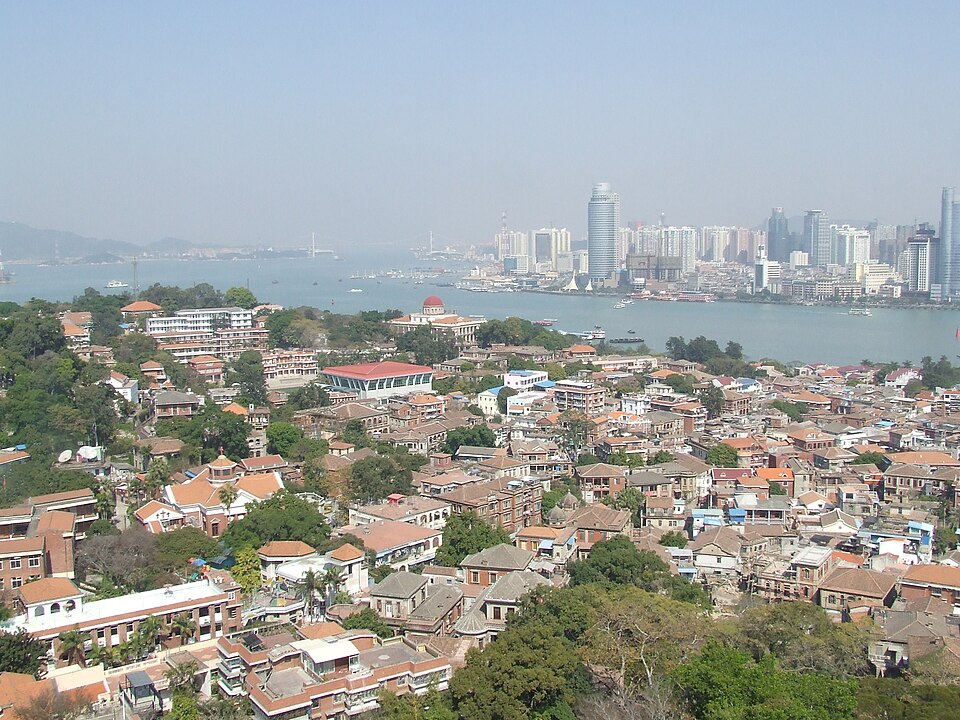
Xiamen is a subtropical port on the Fujian coast, home to 5.1 million people with its suburbs in 2020, which is small by Chinese standards. It suits people who like seafood, noodle snacks and tea in the morning. Gulangyu, a car-free islet five minutes by ferry from downtown, is where old consulates and villas stand beside the homes of musical families. The local language, Minnan, is the same one spoken in Taiwan and across Southeast Asia.
The earthen houses to the west are a UNESCO World Heritage Site, three to five hours from the city. Add a night if you want to reach them.
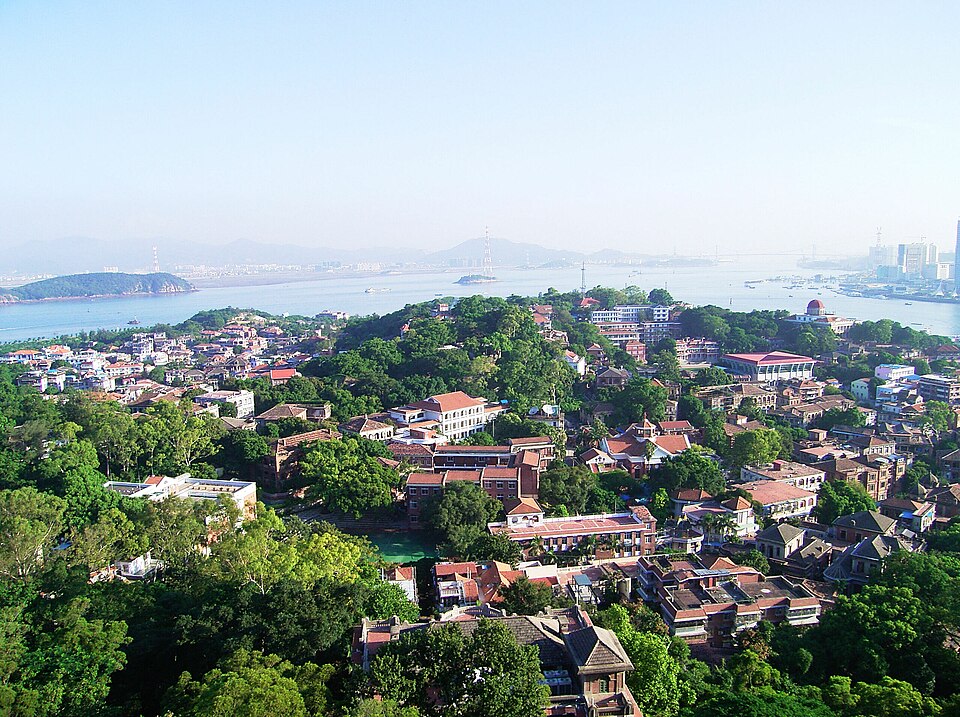 SightGulangyuA former treaty-port enclave with old consulates and a mix of southern Fujian and Western building styles, listed by UNESCO in 2017. Boats are the only way in, and no cars are allowed.4.5(54.7K)
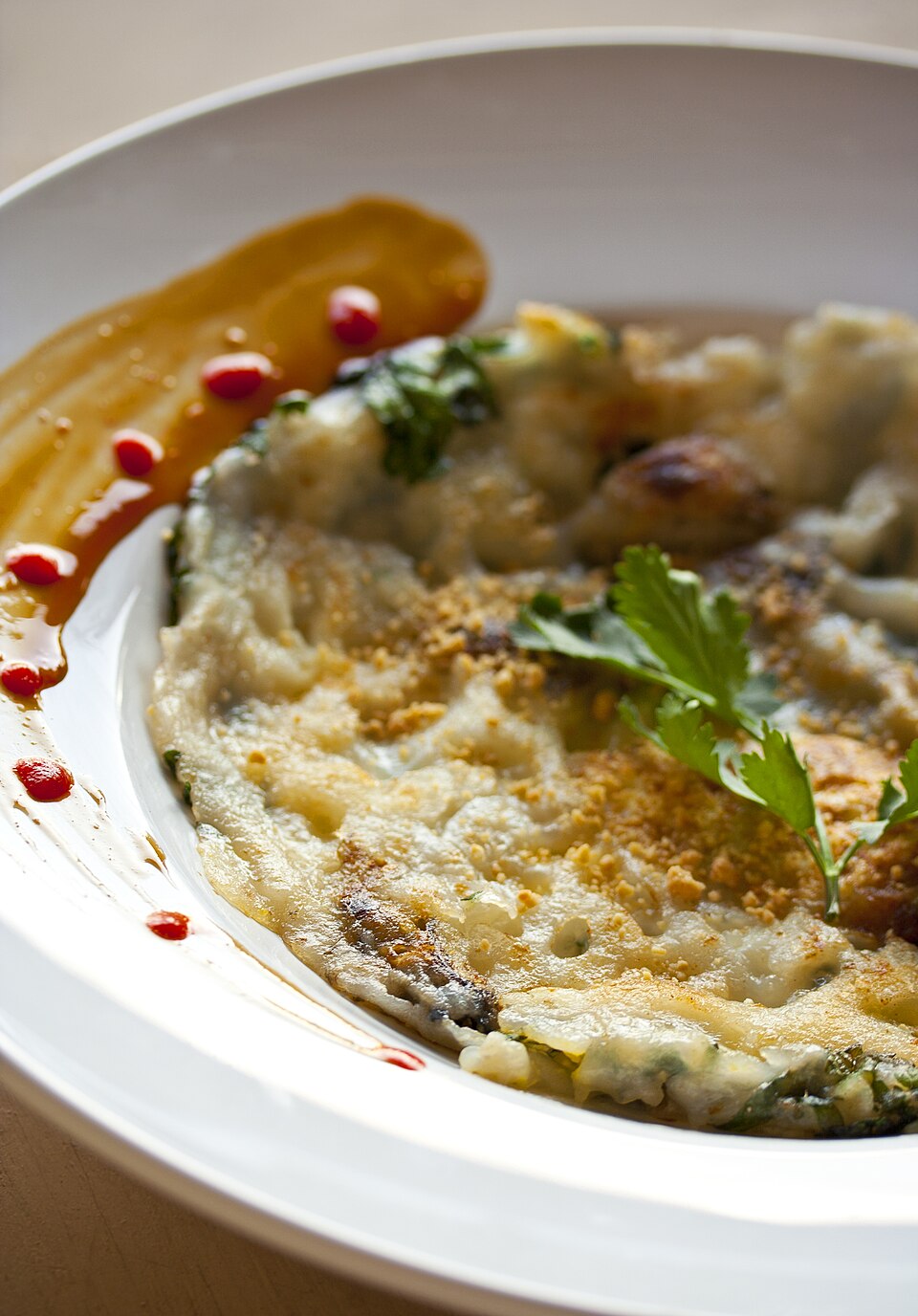 FoodOyster omeletteTiny oysters are fried with egg, sweet potato starch and garlic shoots. If you know the Taiwanese dish of the same name, expect something quite different.
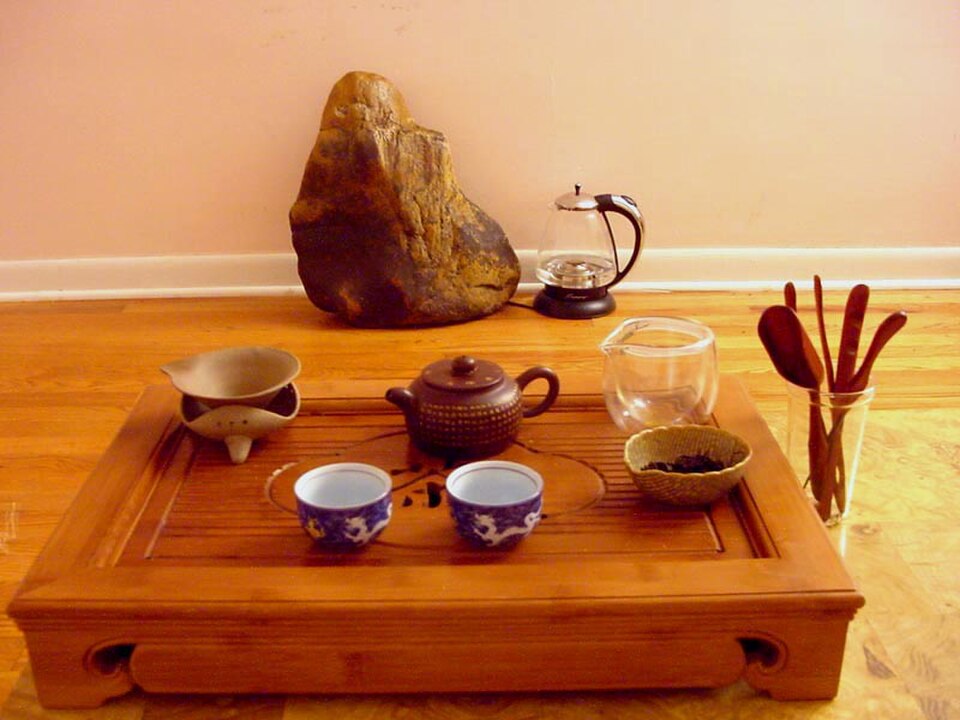 DrinkGongfu teaXiamen is counted among the places where the gongfu tea ceremony began. Locals mostly drink oolong, and Anxi Tieguanyin is the one they love. Many start the day with a cup.
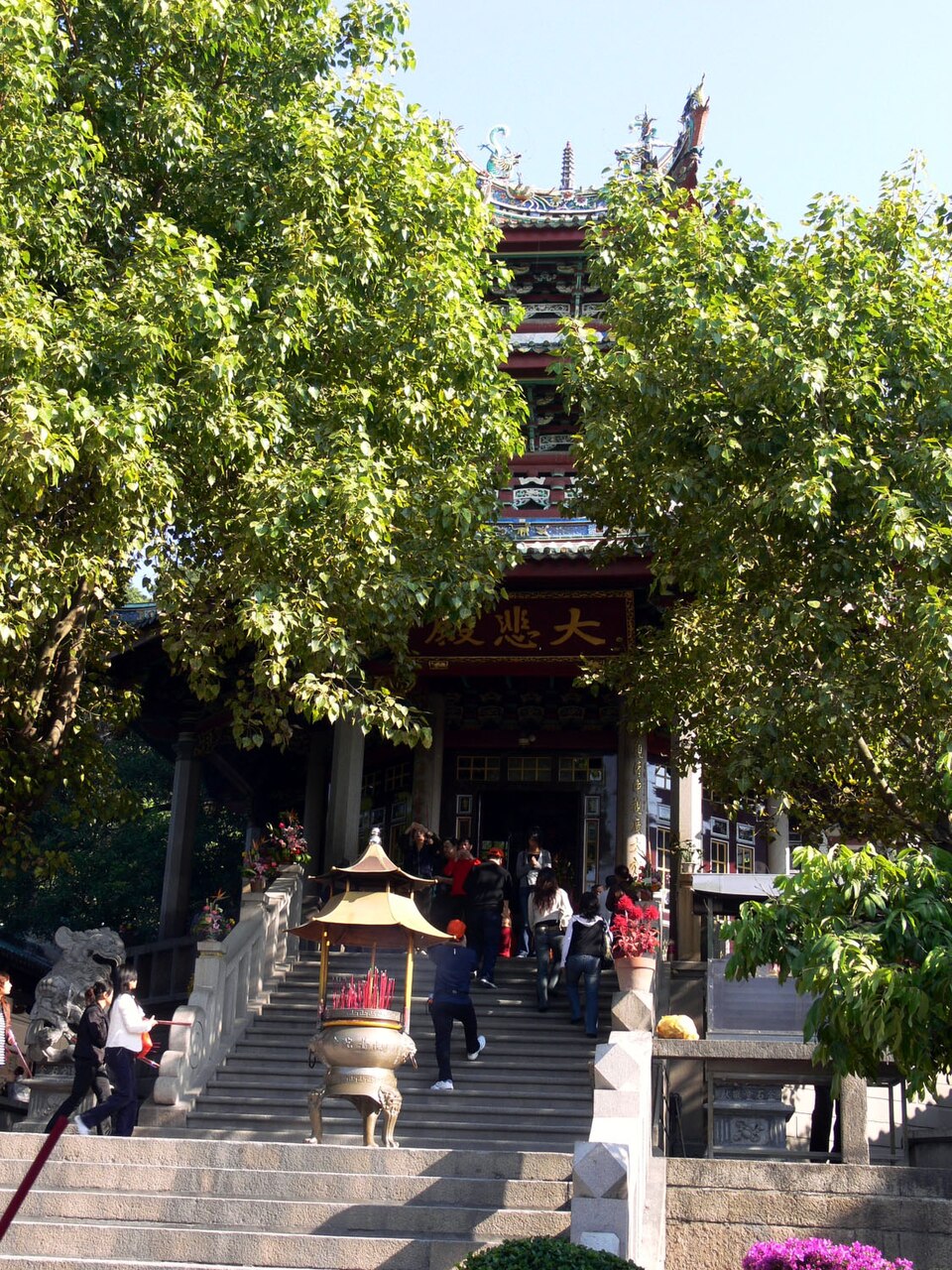 SightNanputuo TempleA Buddhist temple that sits within 100 metres of the Xiamen University gates, with lotus ponds and caves in its grounds. It was badly damaged and turned into a factory in the Cultural Revolution, then restored in the 1980s. Climb Wulao Feng at the back for a view of the campus and city.4.6(5.4K)
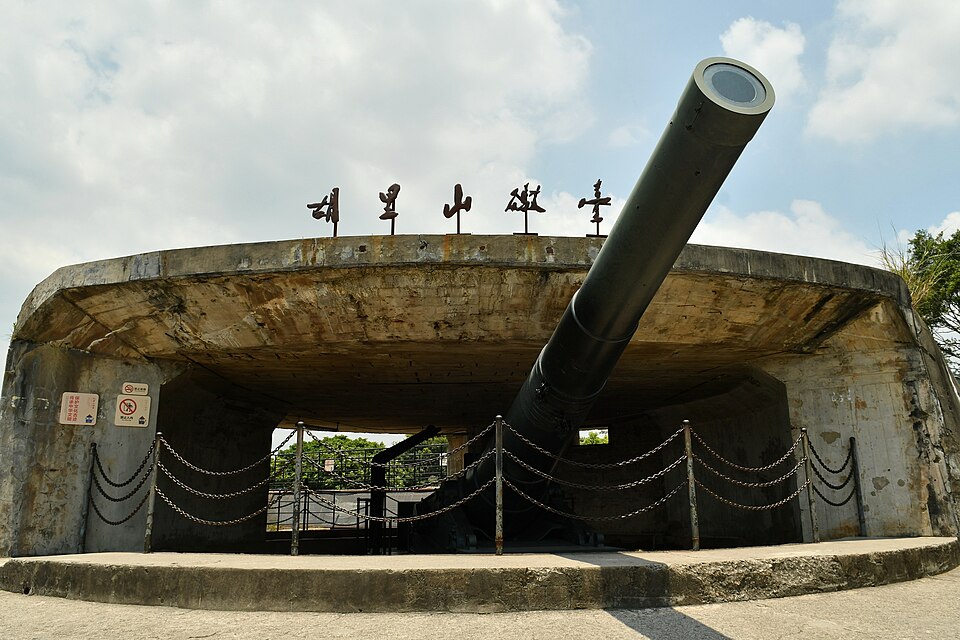 SightHulishan FortressA concrete defensive fort on the south shore. One of its original two cannons, made by Krupp in Germany, still stands. Kinmen lies just across the water.4.7(16.2K)
Han dynasty records mention the island around the time of Christ, and a town stood here by the Song, a thousand years ago. Foreign trade was then legally limited to Quanzhou, which governed the area, so Xiamen grew as a seaport in its shadow. The name comes later. In 1387 the Ming built a defence castle on the island against pirate raids, and the city took its name from it.
When the Ming fell, the island became a base for the loyalist general Koxinga, who ran it from 1650 to 1660 and renamed it with a word meaning Think Ming. He drove the Dutch out of Taiwan in 1661 and moved there, and Xiamen fell to a joint Qing and Dutch force two years later. The Siming district still carries the loyalist name.
Britain captured Xiamen in August 1841, and the Treaty of Nanjing the next year made it one of the first five ports open to British trade. Tea and porcelain went out, and rice, cotton and opium came in. The trade had a darker side: indentured labourers were part of it, some treated almost as slaves, and one company was prosecuted by the British for kidnapping workers. Foreigners settled on Gulangyu, which is why it has consulates and villas. The old city, by contrast, had lanes about a metre wide, laid out on feng shui advice to keep out the sun.
The export economy collapsed by the 20th century, undercut by British tea plantations in India. Many southern Fujianese left for Taiwan and Southeast Asia, taking the Hokkien language with them. About 350,000 overseas Chinese trace their roots to Xiamen, and some of them sent money back. Tan Kah Kee, who made his fortune in Malayan rubber, founded Xiamen University, the Overseas Chinese Museum and a technical college in Jimei.
Japan occupied the island from May 1938 to September 1945. The Communists took Xiamen in October 1949 but failed to take Kinmen, and the two sides then shelled each other across the water in 1955 and 1958. Because of that, the eastern half of the island stayed undeveloped through the 1960s and 1970s. A giant red slogan on the shore, facing Kinmen, is left over from those years.
In 1980 Xiamen became one of the first special economic zones, set up to draw investment from overseas Chinese and others. In 1984 the zone grew from 2.5 square kilometres in Huli to the whole island, and in 2010 to the whole city. Taiwanese money has poured in, more than into any other mainland city, partly because both sides speak Minnan. The container port on the west side of the island is among the 20 busiest in the world.
Ferry and mail links across the strait reopened in 2001, and by 2010 the Kinmen route saw 1.31 million crossings. UNESCO listed Gulangyu in July 2017. The island is now joined to the mainland by bridges and a tunnel, and a new airport in Xiang'an is due to replace the current one in late 2026.
Rice, seafood, pork, sweet potatoes and pickled vegetables have long been the staples, in a cuisine that belongs to southern Fujian with some Taiwanese influence. Within China, Xiamen is known for street food and snacks. Beyond the dishes above, look for fish balls, peanut soup, crab porridge and braised duck with ginger. Chewing betel nut is illegal and carries a fine of 1,000 yuan.
The day starts with gongfu tea. The local approach has five elements: leaves, water, tea set, fire and surroundings. Visit in October and you can also buy tea at the public Xiamen Tea Fair.
The local language is Minnan, called Hokkien in Southeast Asia and Taiwanese in Taiwan. The Xiamen version is the standard, and it does not match Mandarin or Cantonese. Mandarin is spoken almost everywhere, with a strong local accent similar to a Taiwanese one. English is patchy outside high-end hotels and the places that serve expatriates, and taxi drivers generally speak none, so carry your destination written in Chinese. A word or two of Minnan, such as To-sia for thank you, goes down well with older people and market vendors.
Music is part of home life here. Almost every family has a piano or keyboard, whether or not anyone plays it, and Gulangyu has a piano museum and a concert hall with classical programmes at weekends. The Xiamen International Piano Competition draws entrants every summer. Handicraft is strong too: the Wushipu painting village is home to over 5,000 artists, and Xiamen's exports take 80 percent of the European and American market for hand-painted oils.
Older performing arts survive alongside it. Nanyin is a form of music descended from the Tang court, and Gaojia opera and Gezai opera are sung in Minnan. Jianggu storytellers work the crowd with slang and proverbs, and the chest-clapping dance, in which barefoot men slap their own chests and legs, has been handed down since the Song. Local gods have followings too: Baosheng Dadi, a doctor born near Xiamen in 979, is worshipped across southern Fujian and in Taiwan.
The city lies only a degree above the Tropic of Cancer, and even in January and February nights average 10 °C. Snow last fell in a freak storm in 1893. January averages a high of 17.5 °C and a low of 10.5 °C, with 42 mm of rain, and October to January are the driest months.
Summer is hot and humid. July averages a high of 32.5 °C and a low of 25.6 °C, and August is the wettest month with 215.6 mm. Pack light clothes and an umbrella for sudden showers. Typhoons are a risk from July to September, though most lose strength crossing Taiwan first.
The best time is October and November. October has highs of 27.7 °C and 49 mm of rain, November 24.1 °C and 36.7 mm, and the heat of summer is gone. May and June are wetter, with 171 mm and 203.2 mm.
Best months: Oct–Dec
A car-free islet reached only by boat, with consulates and villas from the treaty-port era. It is the main tourist draw and suits anyone who likes slow walking, old houses and music. Climb Sunlight Rock, visit the piano museum, which has more than 40 old pianos, and look for the Amoy Deco buildings, which blend early modernism with Art Deco.
The waterfront opposite Gulangyu, lined with arcade buildings more than a century old. Shops sit at street level, with homes above.
The south of the island holds Nanputuo Temple and Hulishan Fortress, with Xiamen University between them. It suits people who like temples and a little military history. Visit the temple, then walk to the fort and its Krupp cannon, and the Overseas Chinese Museum, which Tan Kah Kee started.
A long lake on the west side of the island, between the two halves of the city. It is lit up at night, with footpaths along the banks. Haiwan Park, on the seashore to the west, has a half-dozen bars and restaurants with large patios, popular with expatriates, and the Xiamen Museum, with 30,000 relics, is nearby.
Once a small fishing village by the sea, now a tangle of old red-brick houses and small alleys. It suits people who like poking around lanes more than looking at sights.
A harbour district near the centre where old wharves and low houses survive. Its old-Xiamen feel draws young artists, and it is now a place to eat and shop.
A mainland district joined to the island by several bridges. The Tan Kah Kee Memorial Museum honours the overseas Chinese businessman, and the Horticulture Expo Garden, spread over about ten square kilometres and nine islands, was built for the 2007 garden expo.
A mainland district joined to the island by a single bridge, and home to two of the city's five industrial development zones. The oil painting village here has more than 3,000 painters, and its firms grew from 28 to more than 250.
Ferry from Dongdu Wharf (1 hour) or Shuitou Wharf (30 minutes) · about 60 min
Taiwan-controlled islands with villages in traditional Fujianese style and Cold War defences. Going counts as leaving China, so it uses up a single-entry visa.
About 3 to 5 hours west of Xiamen · worth a night
Large earthen compounds in which many homes stand inside one fortified wall, a UNESCO World Heritage Site. The distance makes it a long day, so think about a night out there.
Long-distance buses leave from Xiamen Island; Chongwu has direct buses
An ancient port that Marco Polo called one of the two busiest on Earth around 1290. It has come down in the world since, but it is still worth a visit. Chongwu, an old fortress town farther east, can be added.
South of Xiamen
A windswept peninsula south of Xiamen with long beaches and odd rock formations.
Across the Guangdong border
The centre of Teochew culture, just across the border in Guangdong. Teochew is closely related to Minnan.
UK advice: No warnings
US advice: Level 2, exercise increased caution
Type A, C, I · 220 V
Bring an adapter unless your plugs are type A or C or I.
renminbi (CNY)€1 = 7.31 CNY · $1 = 6.67 CNY
Xiamen Gaoqi International Airport (closing, planned 24 Dec 2026)XMN
Xiamen Xiang'an International Airport (opening, planned 24 Dec 2026)XMN
Traffic drives on the right.
SIM and eSIM: China Mobile, China Unicom, China Telecom
Country calling code +86.
Spoken officially: Putonghua








