
 Sight
 Food





Shanghai
High-speed G train from Suzhou station, 25 minutes on the fastest. · about 25 min
The big neighbour is close enough for a day.
The story of the city
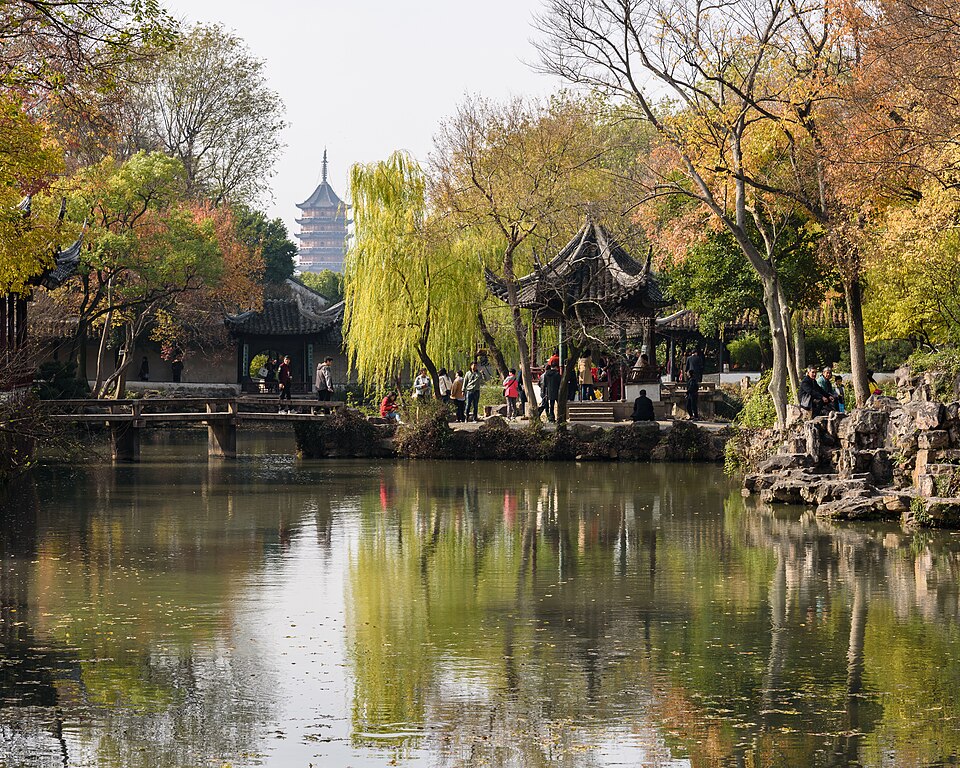
Suzhou is a canal city in Jiangsu where retired scholars once built private gardens, and where factories now turn out more laptops than anywhere else, by one count. Come for the gardens and the lanes beside the water, and expect a working modern city around them. It suits people who like to walk slowly and look closely.
The gardens are big enough that one can take half a day, so the old town fills two days easily. Add a third for a water town, since the popular ones are all within an hour of the centre.
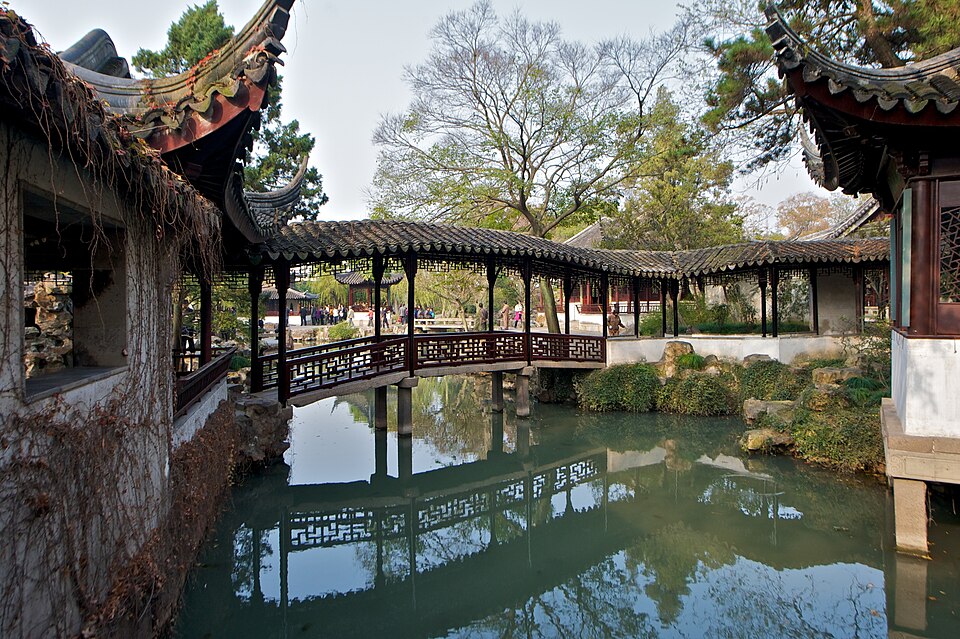 SightHumble Administrator's GardenThe largest private garden in the city, laid out in the 16th century for an imperial censor, Wang Xianchen. The bonsai collection at the far end from the entrance is worth the walk. Free guided tours leave every few minutes but run only in Mandarin.4.6(88.5K)
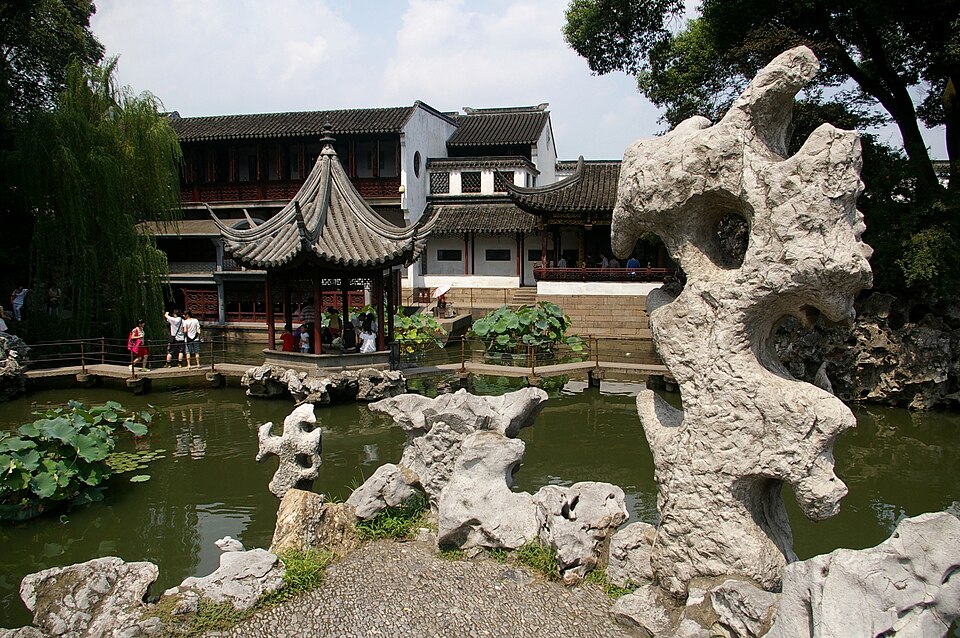 SightLion Grove GardenA garden of eroded, pitted rocks that scholars prized, once part of a Buddhist monastery. The paths twist so much that getting lost is part of the visit.4.7(27.3K)
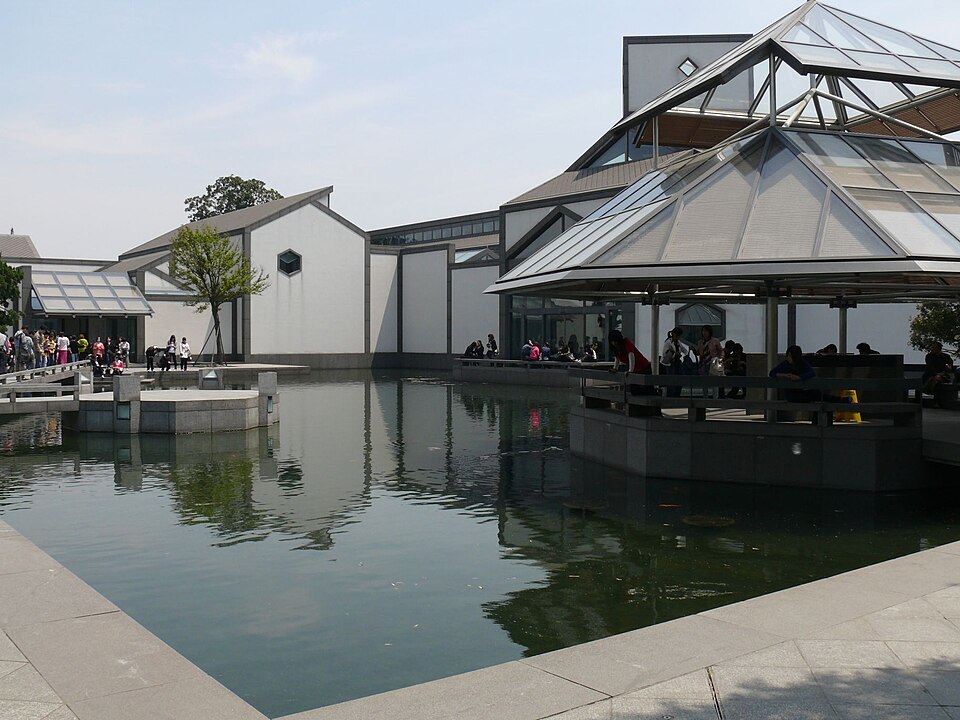 SightSuzhou MuseumThe architect I. M. Pei, with family roots in the city, designed it after coming out of retirement in his 80s. Look for the recreation of a Ming scholar's study. Entry is free but you must reserve on the museum's website; if you can't get a slot, the larger West branch is the fallback.4.8(5.2K)
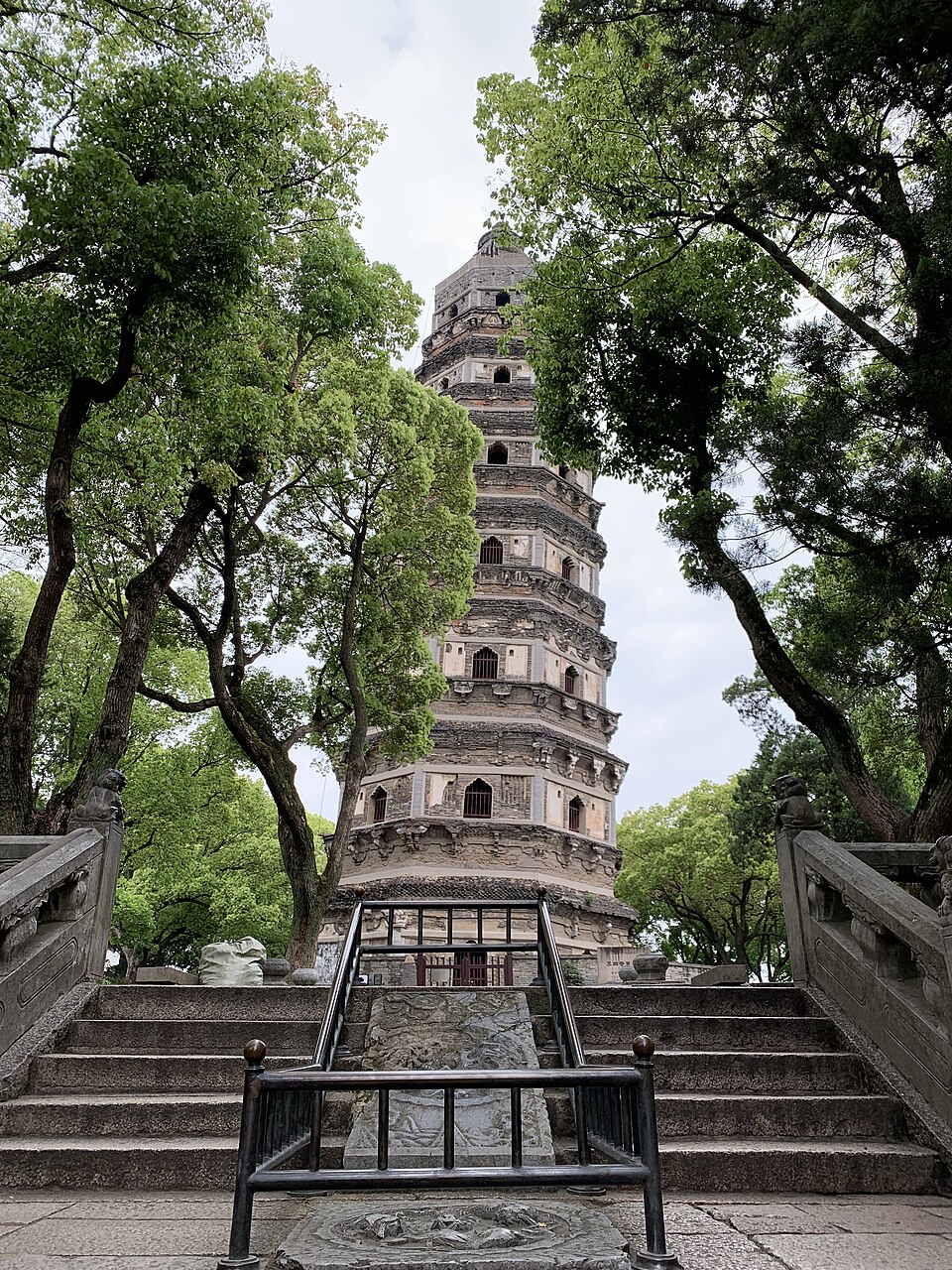 SightTiger Hill and its leaning pagodaKing Helü of Wu was buried here in 496 BC, and a seven storey brick pagoda from 961 now leans on the hill, its top 2.32 metres off the base. The Song poet Su Shi said it was a lifelong pity to visit Suzhou and skip it.4.7(33.4K)
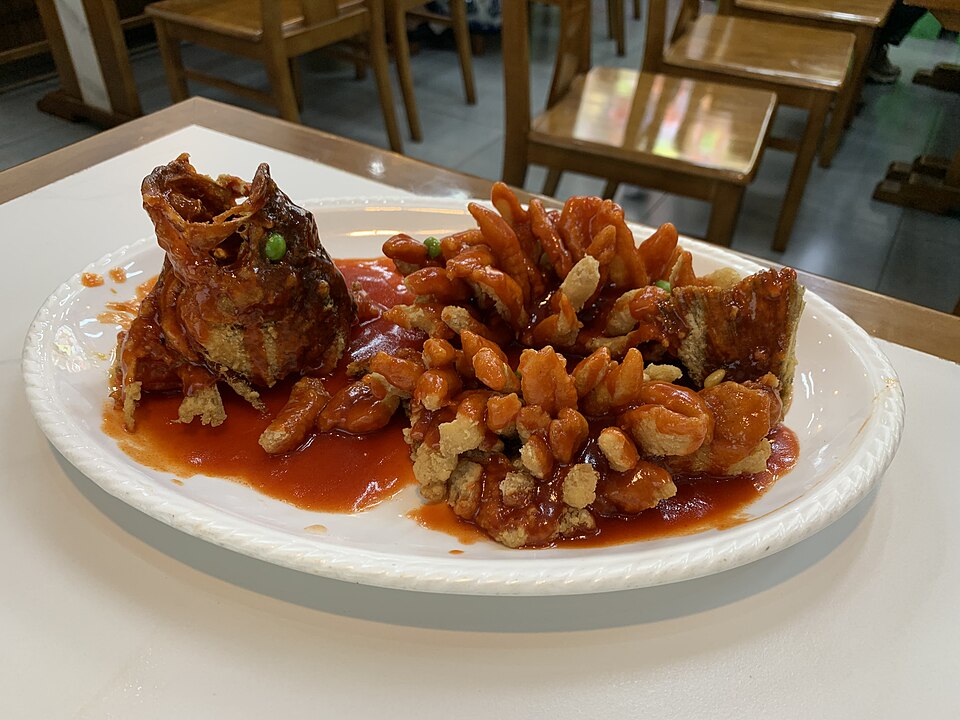 FoodSquirrel-shaped mandarin fish and cold braised duckSuzhou cooking is lightly sweet and delicate. A speciality is a large fish cut into strips, floured, fried and served under pine nuts and a sweet and sour glaze. For a snack, buy cold braised duck at Dusanzhen, which sells takeaway only.
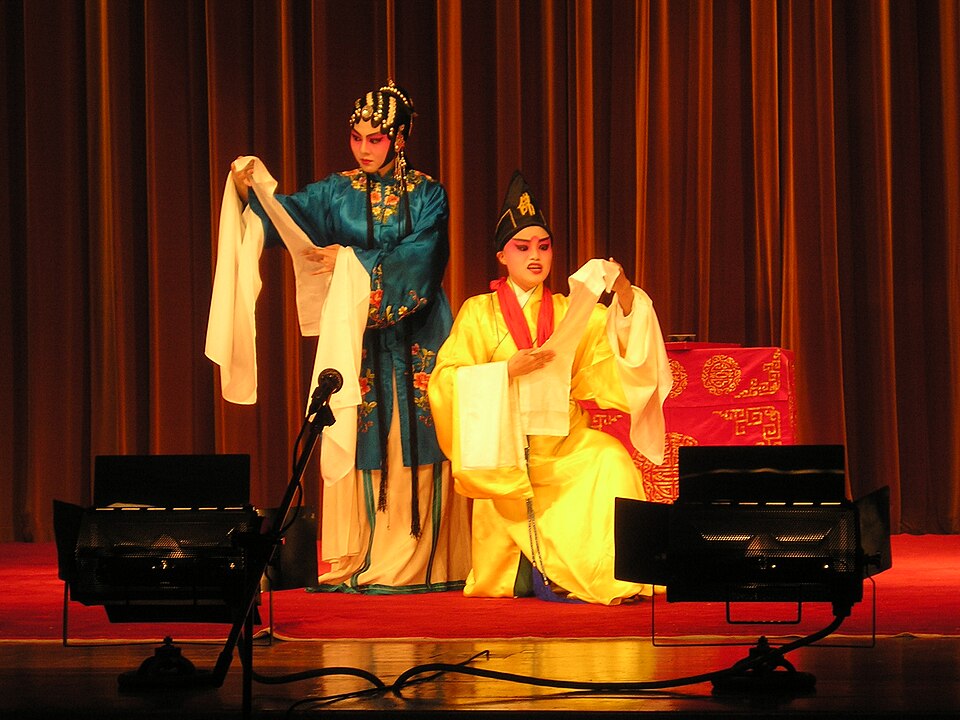 ExperienceKunqu opera and Pingtan storytellingKunqu opera began in the Suzhou region and is on UNESCO's intangible heritage list. The Suzhou Opera Museum stages it around 14:00 on Sundays, along with Suqu opera and Pingtan, a mix of ballad and spoken story, all in the Wu language.
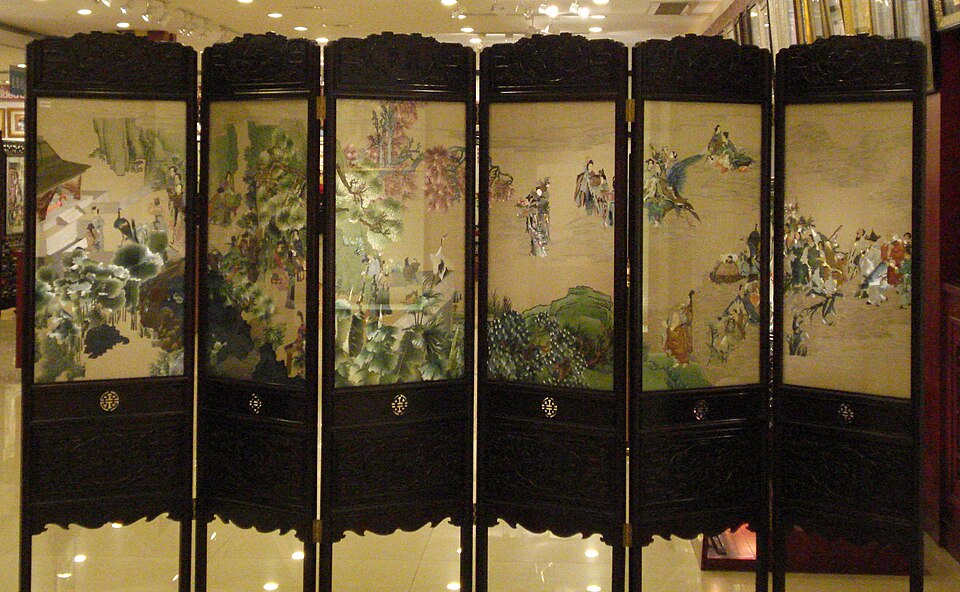 CraftSuzhou silk and embroiderySuzhou has woven and dyed silk since the Song and Yuan dynasties, and its embroidery goes back some 2,000 years. The Embroidery Research Institute is a museum, a workshop and a shop in one. Prices may run a little higher than elsewhere, but the quality is high.
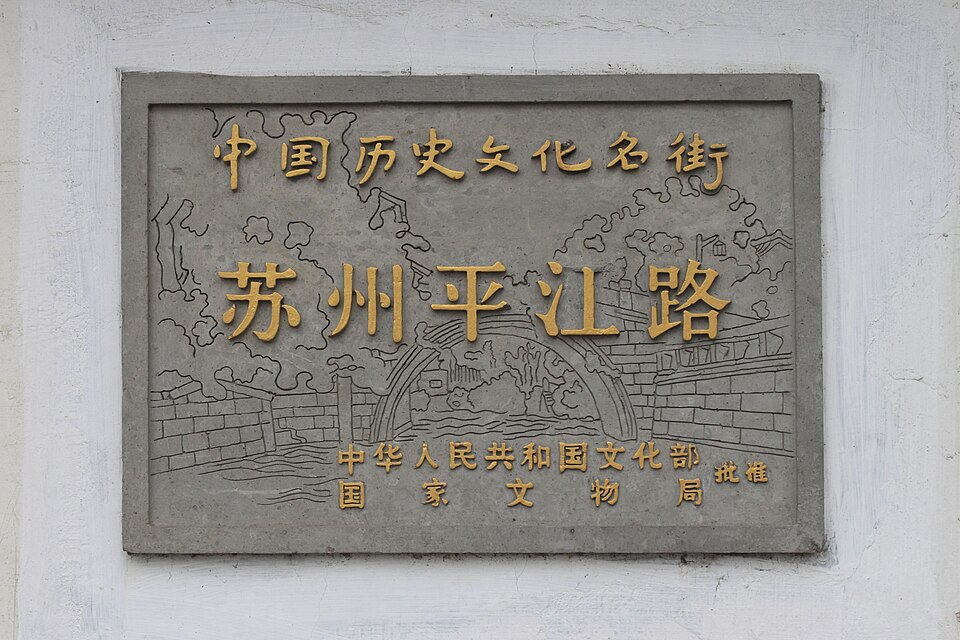 SightPingjiang RoadA 1.5 km lane beside the Pingjiang River, lined with homes and teahouses, on an old road whose hand-cut paving stones are over a thousand years old. Walk it north, away from the shops, where it turns back into a residential street.4.5(226)
In 514 BC King Helü of Wu moved his court here and named the new town after himself. His minister Wu Zixu helped plan it on a grid of nine squares, with the palace in the middle. Helü was buried on Tiger Hill in 496 BC, and Wu fell to its neighbour Yue in 473 BC. Some of that wall survives at Pan Gate, about 2,500 years on.
The name Suzhou was first used officially in AD 589, under the Sui. Once the Grand Canal was finished, the city sat on a major trade route. Under the Tang, the poet Bai Juyi built the Shantang canal to join the city to Tiger Hill. You can still walk it as Shantang Street. By 100 CE Suzhou ranked among the ten biggest cities in the world.
In 1035 the poet Fan Zhongyan founded the Confucian Temple, which became a venue for the imperial exams. A school still occupies much of its grounds. By the 13th century Suzhou was the centre of a profitable silk trade.
In 1356 Zhang Shicheng made Suzhou the capital of his own kingdom. Zhu Yuanzhang took it in 1367 after a ten month siege, pulled down walls at the centre and taxed the great families hard. He then became the first Ming emperor. The city bounced back, and Ming scholar-officials built the private gardens it is known for. A shipwrecked Korean official crossing China in 1488 wrote that Suzhou outdid every other city he saw.
The 19th century hit hard. Rebels held the city from 1860, and by the time Charles Gordon's Ever-Victorious Army retook it in November 1863, many buildings and gardens were close to ruins. The population still recovered to about 500,000 by 1880. Shanghai overtook Suzhou around 1850, and the railway between them opened in 1906. The Japanese invasion of 1937 devastated more gardens, and restoration of the Humble Administrator's and Lingering gardens began in the early 1950s.
In 1994 China and Singapore signed the deal that created Suzhou Industrial Park beside Jinji Lake. Growth since reform began in 1978 has run at about 14% a year over 35 years. Buildings over 24 metres are banned in Gusu District, the old town, so most of the towers stand in the Industrial Park and New District. The classical gardens were added to UNESCO's World Heritage list in 1997 and 2000.
Food here leans light and slightly sweet, with freshwater fish and shellfish at the centre, and sweets made from glutinous rice paste that can puzzle first-timers. Fengmen Hengjie, a narrow market street, is busiest from morning to afternoon and is mostly for locals. At Xi Sheng Yuan on Fenghuang Jie, the wontons and xiao long bao draw crowds at lunch and dinner, but tables turn over fast. Song He Lou on Guanqian Jie is reputed to be about 250 years old, and you should expect to pay over ¥100 a head.
The local language is Wu, which Mandarin speakers cannot follow, and a Suzhou accent carries prestige. Most people speak Mandarin as well, except some of the elderly. English is not widely spoken outside good hotels, tourist shops and expat bars, so have your destinations written in Chinese for taxi drivers.
The gardens follow the style of Chinese painting, so each view in one reads as a picture. The same eye for craft shows in Song brocade, one of China's three famous brocades, and in the woodblock New Year prints of the Taohuawu studio. At the Silk Weaving Technique Inheritance Center, master weavers work with apprentices in a workshop partly open to visitors. In small gardens such as the Garden of Pleasure, you will see local elderly people drinking green tea.
Suzhou has a large expatriate community, and a higher share of it comes from other Asian countries than in most Chinese cities, thanks to Singaporean and Malaysian investment. Most of the bars and restaurants that serve them are downtown and in the Industrial Park, with international menus and often live music. Many service workers come from poorer provinces, so the Mandarin you hear in taxis and restaurants often has a Sichuan or Anhui accent.
Go in April or October. April runs from 12.5 to 21.1 °C with about 83 mm of rain, and October from 16.3 to 23.4 °C with about 69 mm. Avoid 1 to 7 October, the National Day holiday, when Chinese domestic travel peaks.
Summer is hot and humid. July averages a high of 33 °C, and June is the wettest month at 211 mm. The record high is 41.0 °C, set in August 2013. The Canglang Pavilion is densely wooded and good for escaping the sun. The Couple's Garden Retreat has mostly covered walkways, so rain does not stop you.
Winters are cool, cloudy and damp. January highs reach 8.1 °C and lows 1.8 °C, and winds from Siberia can bring night frosts. December is the driest month at 48.6 mm. Entry to the Humble Administrator's Garden costs ¥10 less off season, though the Master of the Nets closes at 16:30 from November to February.
Best months: Apr, Oct
The northeast of the old city. The Humble Administrator's Garden is here, with the Suzhou Museum near its entrance, and Lion Grove Garden is close by. Pingjiang Road runs south from the museum area, and the Couple's Garden Retreat hides in a lane off it. It suits garden people and slow walkers.
Central and busy, named for the Twin Pagodas. Guanqian Jie is a pedestrian shopping street whose own stretch is dull, but the back streets hold small craft shops and local restaurants. Shiquan Jie has restaurants, bars and the Master of the Nets. At the east end of Guanqian Jie, joss smoke fills the Taoist Temple of Mystery.
The south and southwest of the old town. The Surging Wave Pavilion is among the oldest of the scholar's gardens, and the Confucian Temple, from 1035, stands nearby. In the southwest corner, Pan Gate is a combined water and land gate, with a climbable seven storey pagoda in the same complex.
Shantang Street runs 3.8 km from Changmen gate to Tiger Hill. The southeast end can be mobbed with tourists, but further north the souvenir shops fall away and you get a canal walk through a quiet residential neighbourhood.
Modern Suzhou, east of the old town, around Jinji Lake. Planners from Singapore helped design it, and it has wide boulevards, malls and parkland. The 1,400 m Ligongdi causeway is lined with bars and clubs. The 450 m Suzhou IFS is the tallest building in the city. Come for the evening after a day among the gardens.
The west and northwest, home to Tiger Hill and the Lingering Garden, among the biggest of the classical gardens. Xiyuan Temple is a short walk from the Lingering Garden. The Suzhou Museum West, larger than the main branch, sits in this district too.
South and west of the centre, on the shore of Lake Tai, where there are popular beaches. The district is known for crafts such as embroidery, carving and instrument making.
High-speed G train from Suzhou station, 25 minutes on the fastest. · about 25 min
The big neighbour is close enough for a day.
Agency tour from Suzhou, or about 40 km by road; all the water towns are within an hour.
A water town with canals and old houses, set up for tourists. Many Suzhou agencies run tours.
Agency tour; about 30 km south of the centre.
Another water town, and home to the Retreat and Reflection Garden, one of the nine gardens on the UNESCO list.
Metro Line 1 to the last stop in the west.
A water town you can visit without a tour. It is reportedly a bit shabby and less developed than the others, though easier access may change that.
Head west; the Taihu resort zone is 15 km from the city centre.
China's third-largest freshwater lake, with beaches on the Wuzhong and Wujiang shores and a resort zone 15 km from the centre.
Neighbouring cities; check current train times at the station.
Wuxi sits near enough that residents of each city often eat or shop in the other. Yixing is known for pottery, especially teapots.
UK advice: No warnings
US advice: Level 2, exercise increased caution
Type A, C, I · 220 V
Bring an adapter unless your plugs are type A or C or I.
renminbi (CNY)€1 = 7.31 CNY · $1 = 6.67 CNY
Tipping: Not expected anywhere, including taxis and tour guides; some upscale hotels add a 10% service charge
Shanghai Hongqiao International AirportSHA
Shanghai Pudong International AirportPVG
Sunan Shuofang International Airport (Wuxi)WUX
Traffic drives on the right.
SIM and eSIM: China Mobile, China Unicom, China Telecom
Country calling code +86.
Spoken officially: Putonghua








