
 Experience
 Food
 Nature





Hong Kong
Train across the border, under an hour. · about 50 min
The city whose money and connections built Shenzhen is across the border. Remember that crossing counts as leaving China, so a single-entry visa is used up.
The story of the city
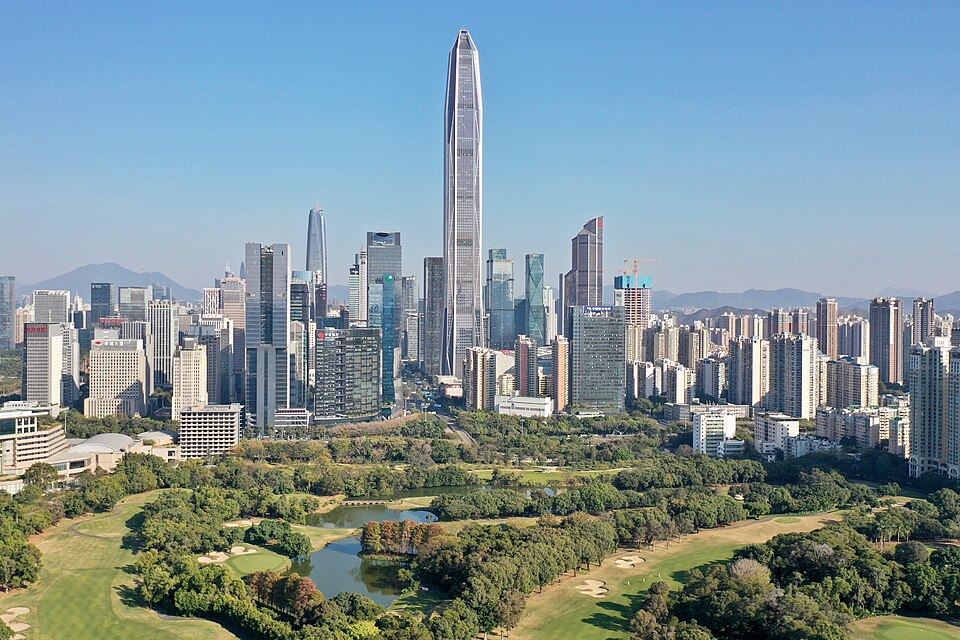
In 1980 Shenzhen was a market town of 30,000 people on the Hong Kong border. Today it has around 18 million, a large share of them arrivals from elsewhere in China, and it is full of skyscrapers and factories, with a surprising amount of green. It suits people who like cities still being made: a day in the component markets, an evening in a mall, a morning on a mountain trail.
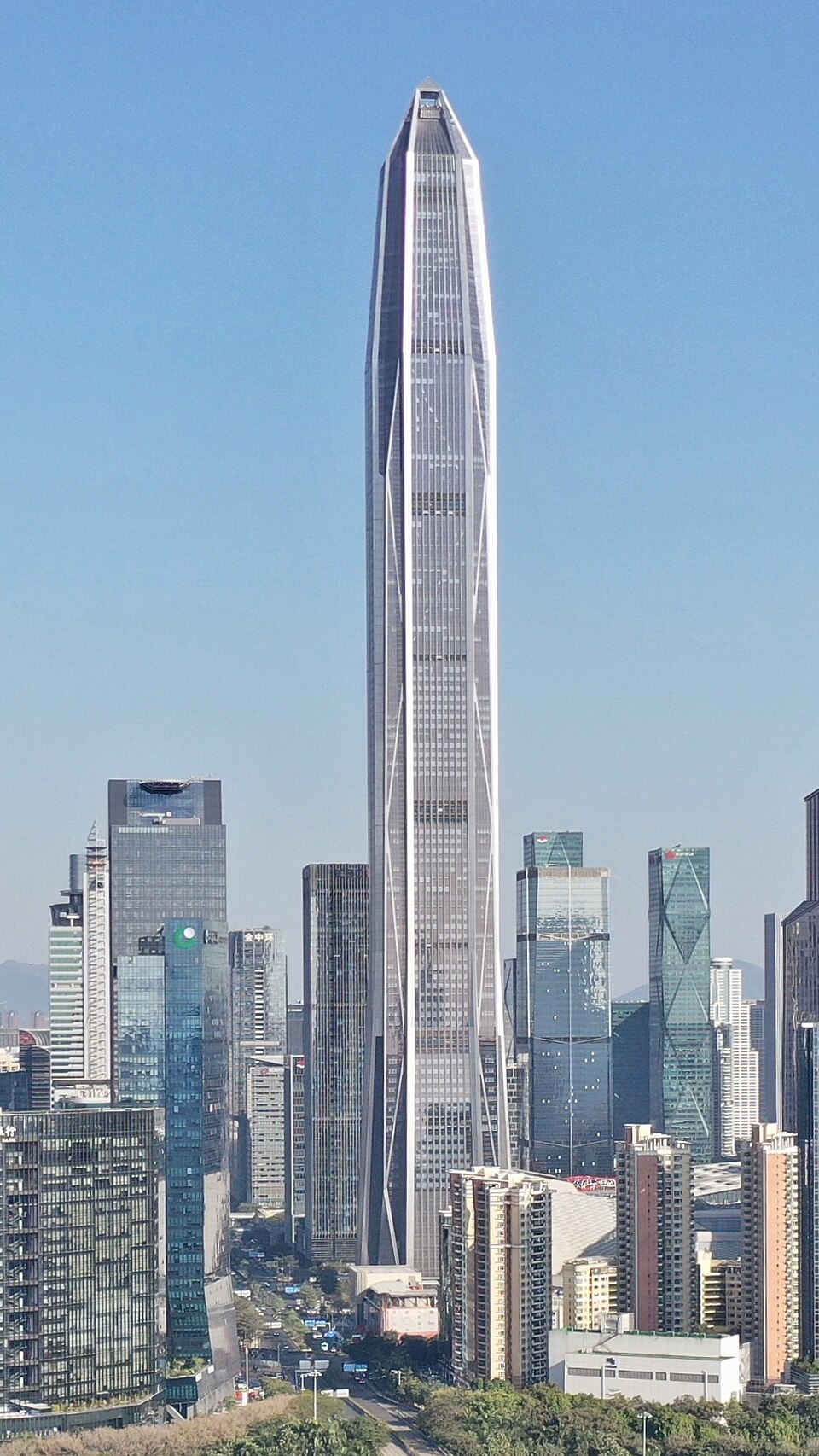 SightThe skyscrapersPing An Finance Centre was finished in 2015 and rises 599 metres, which makes it the fifth tallest building on Earth. KK100 is 441.8 metres and has a St. Regis hotel in its top section. By July 2021 the city had 297 buildings above 150 metres.
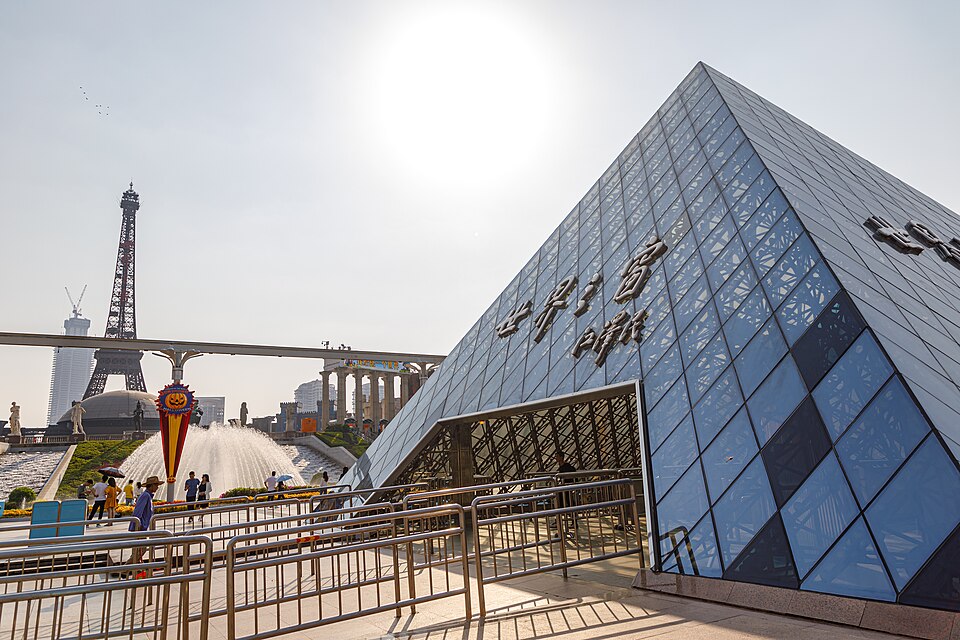 ExperienceOverseas Chinese Town theme parksMost of the big attractions belong to one operator, OCT, and include Window of the World, Splendid China Folk Village and Happy Valley. Western visitors split between loving them and finding them tacky, so decide which camp you are in before paying. OCT's own app, in Chinese only, gives discounts.
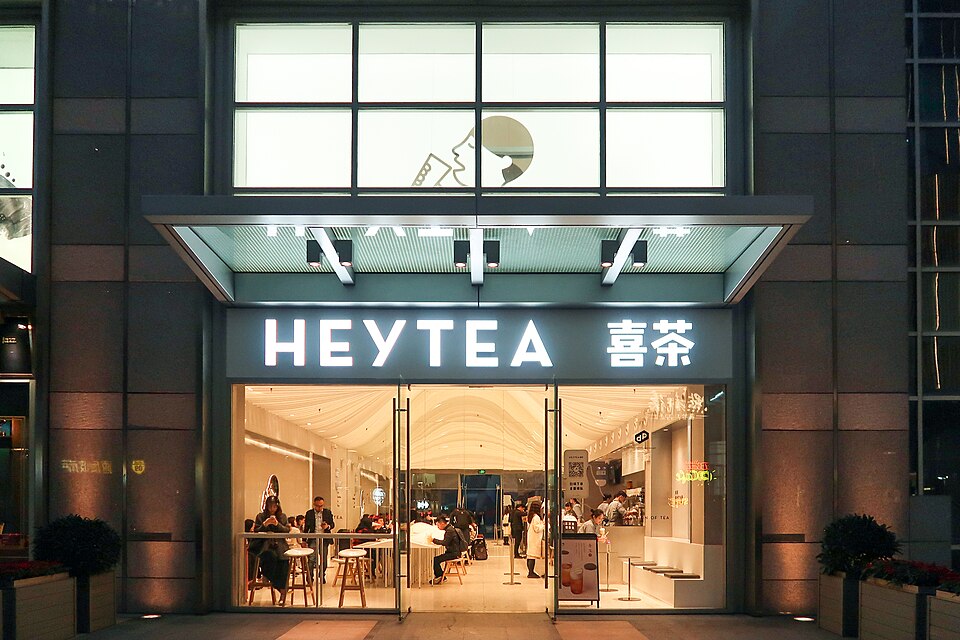 DrinkHey TeaThe fruit and cheese teas of this local chain are worth trying once, as a taste of a city whose population skews young.
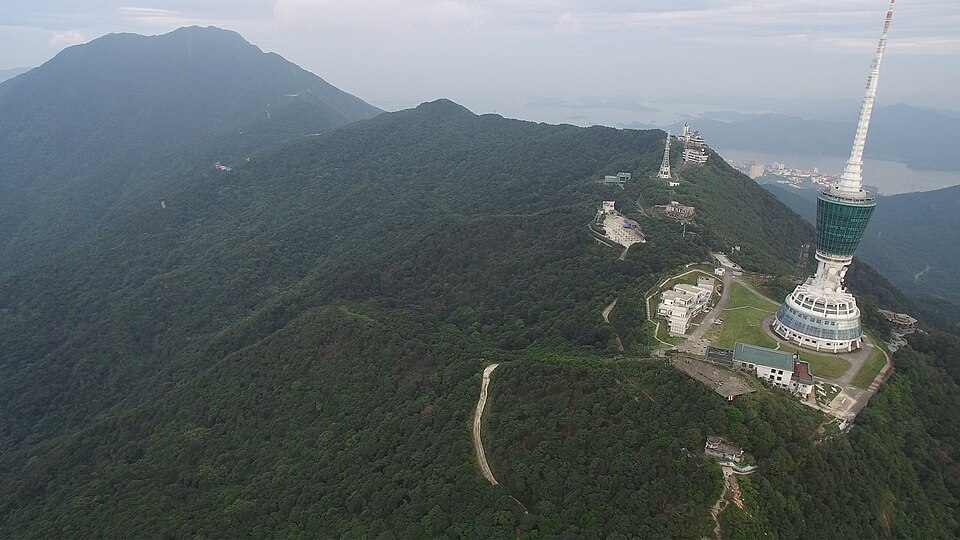 NatureHiking the city's mountainsWutong Mountain has an observation deck with views over the skyline, across the bay to Hong Kong. Trails are paved with hundreds of steps, and they fill up on weekends and holidays. Start early, and in summer start before dawn.
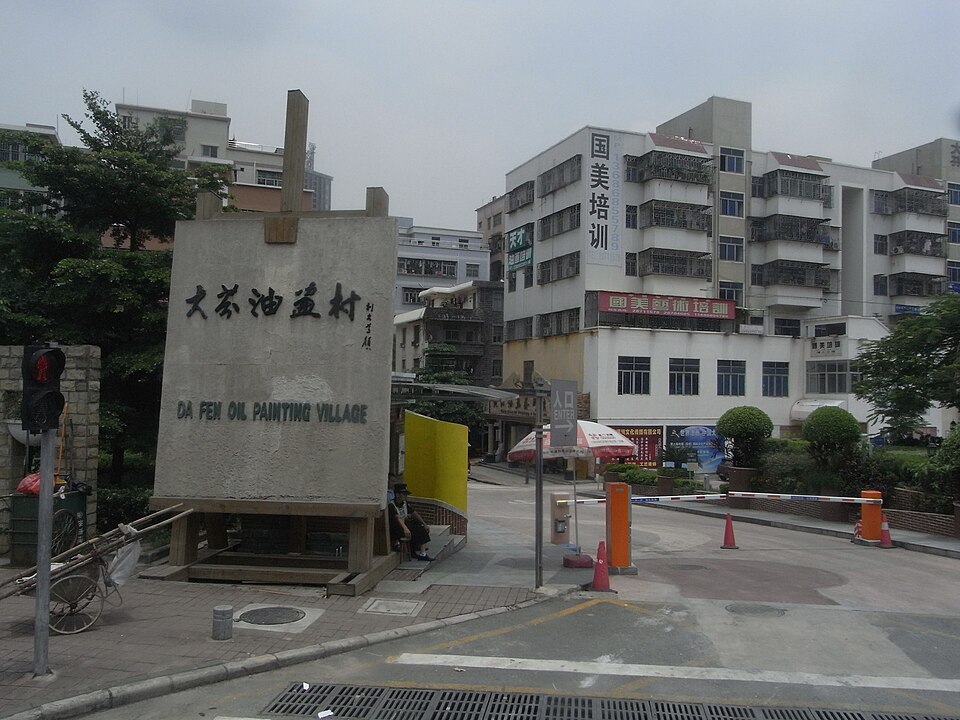 CraftDafen oil painting villageDafen is the hub of Shenzhen's oil painting industry, with wholesale and made-to-order work. It has its own art museum, the only one in the city devoted to the village's work. Visit to commission a copy.
 SightHakka walled villagesIn Longgang, villages such as Crane Lake and Gankeng are built around thick grey walls, narrow alleys and courtyards. They are a reminder that Shenzhen was a Hakka and Cantonese region long before the 1980s.4.5(923)
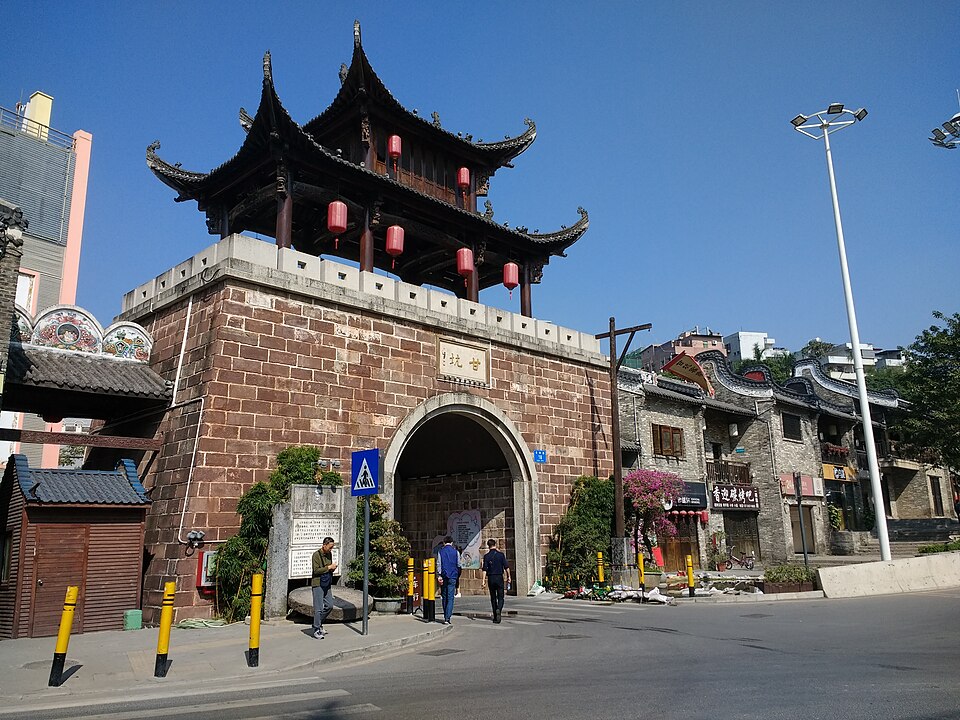
Shenzhen is not the fishing village of the usual story. People have lived here for some 6,700 years, and by the 12th century Nantou was a trading point for salt and spices, with pearls following in the 13th. The town of Nantou went up in 1394 under the Ming and was the seat of Xin'an County. The old gate and the Guandi Temple at Nantou survive.
For centuries the coast was a frontier. Pirate raids led the authorities to move residents northward, and in 1669 Bao'an County was folded into Dongguan. After the Opium Wars Britain took Hong Kong Island and Kowloon, and in 1898 it leased the New Territories for 99 years. That line is still visible at Chung Ying Street in Yantian, where a boundary stone sits in the middle of the road. In 1911 the railway from Kowloon to Canton opened, with Shenzhen station as its last stop on the Chinese side.
The railway made Shenzhen the sensible place to run the county from, and in 1953 the Bao'an government moved there. Through the following decades the county took in people fleeing upheaval elsewhere on their way to Hong Kong, somewhere between 100,000 and 560,000 at once. In 1979 the county was renamed Shenzhen, which means deep ditch, the local word for an irrigation channel. The name had been picked a year earlier by Xi Zhongxun, then Party Secretary of Guangdong.
In May 1980 Beijing made Shenzhen the first of its Special Economic Zones, when it held 30,000 people. The idea was a sealed enclave where market reforms could be tried without risk to the system elsewhere. Hong Kong's capital and know-how, just across the border, decided the choice. The first project, the Shekou Industrial Zone under Yuan Geng, was approved in 1979. In 1983 barbed wire and checkpoints went up along a second line between the zone and the rest of China.
Money and brands followed. The first McDonald's in mainland China opened in Luohu in October 1990, and the Shenzhen Stock Exchange was founded that December. By 2001 more migrants were settling in Shenzhen instead of trying to cross into Hong Kong. In July 2010 the second line was dissolved and the zone grew to cover the whole city, five times its previous size. Residents still say guānnèi, within the border, for the four central districts, and guānwài for the six outer ones.
Its economy overtook Hong Kong's in 2018. Huawei, Tencent, DJI and Oppo started here, and BYD makes it the largest car-making city in China. In 2021 the city made it harder to get a local hukou, the residency registration, after growing past its target.
Shenzhen is a city of arrivals, and you hear it. Until 1980 Cantonese was the main language here, with some Hakka. Mandarin has since become the main language, though most people in service jobs can speak Cantonese because of Hong Kong next door, and many second-generation residents can too. Only around a third of residents in 2020 held local registration, which tells you how many people came from somewhere else.
Food follows the same pattern. The base is Cantonese, and larger Cantonese restaurants serve morning tea. Hunan, Sichuan and Chongqing hot pot arrived with migrants, usually spicier than local taste, so say so if you want less chilli. Guangdong, Hunan and Sichuan food are the most common, and a very good meal can cost under ¥40.
Nightlife centres on COCO Park and Shekou, and many bars stay open until morning. Tunnel raves have a reputation abroad but are often shut down by police. For something calmer, Nanshan's OCT-LOFT area has craft beer bars. Hong Kong visitors cross the border for massage and spa.
The city has put effort into reading and design. Shenzhen had 620 public libraries by the end of 2015, and Shenzhen Book City in Futian claimed to be the largest bookstore in Asia when it opened. UNESCO admitted Shenzhen to its Creative Cities Network as a city of design in 2008. Skateboarders come for the architecture, and DJI hosts the annual RoboMaster robot competition.
Buddhism and Taoism are the two main faiths, and every district has Protestant and Catholic churches and mosques. At Chiwan, the Tianhou Temple was Zheng He's gift to Mazu, the sea goddess, to protect the Ming treasure fleet.
October to December is the time to come. The days are warm and dry: November averages a high of 25.7 °C and only 31.7 mm of rain, and December is cooler at 21.5 °C. October is still 29.2 °C, but the rain has dropped to 73.4 mm. Winter also brings migrating birds to the bay.
Summer is long, hot and wet. July reaches 32.3 °C with a low of 26.6 °C, and June has 368.7 mm of rain. Typhoon season runs from June to October. If you must come, start hikes before dawn, and when a downpour hits, wait a few minutes: Shenzhen rain tends to switch on and off quickly.
Spring is cooler, but fog and heavy thunderstorms are common, and rain climbs from 64 mm in March to 237.1 mm in May. January and February are mild at 19.8 °C and 20.8 °C highs, and dry. Weekends and public holidays bring crowds to the trails, so go on a weekday if you can. If you can choose, aim for November.
Best months: Nov–Mar
Futian has Shenzhen Book City, Lianhuashan Park, whose hilltop has a six-metre bronze of Deng Xiaoping, and the Mangrove Ecopark. Prices for food are higher in the middle of Futian.
The electronics district: markets, stalls and component shops stacked into whole buildings. It is for people who want to buy gadgets or see where they come from, and it is hard to find a reason to visit otherwise. Bring mobile payment and use the stalls to compare prices.
Luohu is the old crossing point from Hong Kong, built around Shenzhen railway station. Luohu Commercial City, beside the station, sells everything from electronics and tailored suits to curtains, and counterfeits too. Spas near the border cater to Hong Kong day visitors, and Wutong Mountain is in the district. It suits people arriving by train from Hong Kong.
Nanshan has the coast: Shenzhen Bay Park, Dashahe Park along its river, and the OCT-LOFT craft beer bars. Most of the theme parks are in this district, and historic sites are concentrated here and in the east. It suits a mix of park days and evenings out.
Shekou is where the 1979 industrial zone started, and its old restaurants serve a mix of cuisines. It has the biggest concentration of expat restaurants in the city, which are pricey. Nightlife is lively around Shekou and COCO Park, and ferries leave from the terminal for Hong Kong and Macau. On the Shekou peninsula at Chiwan there is a Qing battery built in 1669.
OCT is the base of the theme parks. Window of the World, Splendid China and Happy Valley are here, along with OCT East and OCT Harbour. It suits families and anyone happy to spend a day in park mode.
The old Xin'an county seat sits in Nanshan. Its gate, Guandi Temple and coastal defence office survive, though modern construction has replaced most of the older buildings. It is a quick historical stop, not a day out.
The eastern coast has beaches and seafood. Dameisha and Xiaomeisha are popular but crowded and dirty, so go further east for quieter sand. Yantian restaurants line the shore, and Chung Ying Street at Sha Tau Kok has a border stone in the middle of the road.
The outer east holds Hakka walled villages such as Crane Lake and Gankeng, and Dapeng Fortress, a Ming-era military town that still keeps its original street pattern. The Dapeng Peninsula also has beaches at Jinshawan, Nan'ao and Xichong.
Train across the border, under an hour. · about 50 min
The city whose money and connections built Shenzhen is across the border. Remember that crossing counts as leaving China, so a single-entry visa is used up.
About an hour by train. · about 60 min
The provincial capital has been a trading city for centuries and has more history and a more settled culture than Shenzhen. It makes a good contrast, though it lacks Shenzhen's pace.
Bus from the Luohu Station depot, about 40 minutes. · about 40 min
Mountains and beaches to the northeast, popular with weekenders.
Ferry from Shekou or Fuyong, or helicopter from the airport. · worth a night
The old Portuguese colony has gambling, but also interesting architecture and history.
High-speed train, about an hour. · about 60 min
Kung fu country: it is where Wong Fei-hung and Ip Man were born, and where Bruce Lee's family came from.
Ferry from Fuyong, 45 minutes. · about 45 min
Birthplace of Sun Yat-sen, who led the revolution that toppled the Qing and became China's first president.
UK advice: No warnings
US advice: Level 2, exercise increased caution
Type A, C, I · 220 V
Bring an adapter unless your plugs are type A or C or I.
renminbi (CNY)€1 = 7.31 CNY · $1 = 6.67 CNY
Tipping: Tipping is uncommon; upmarket restaurants add 10% service; guides ¥10–20, hotel bellhops ¥20–50
Shenzhen Bao'an International AirportSZX
Traffic drives on the right.
SIM and eSIM: China Mobile, China Unicom, China Telecom
Country calling code +86.
Spoken officially: Chinese








