For well over a thousand years Sanya was where the court sent people it was finished with. Prime ministers, officials and scholars were exiled here, and the region's distance from the centres of power gave the place its old nickname. Ten of the fifteen prominent exiles recorded between the Han and the Ming dynasties lived in one village in Yacheng, and their descendants are still there.
The written record starts under the Qin, when Emperor Qin Shi Huang set up a county here. The place was long called Yazhou, meaning cliff prefecture. In the Tang dynasty a Buddhist monk landed by accident and used it as a staging post on a mission to Japan. The oldest town in the area, Yacheng, goes back to the Song dynasty, and its Confucian temple dates from 1054, though today's buildings are from 1832.
Sanya as a city is young. Yazhou became Yaxian county in 1912, and fighting for Hainan Island ended in 1950 with the People's Liberation Army taking it from the Nationalists. In 1958 the county government moved from Yacheng to Sanya. Sanya was made a city in 1987.
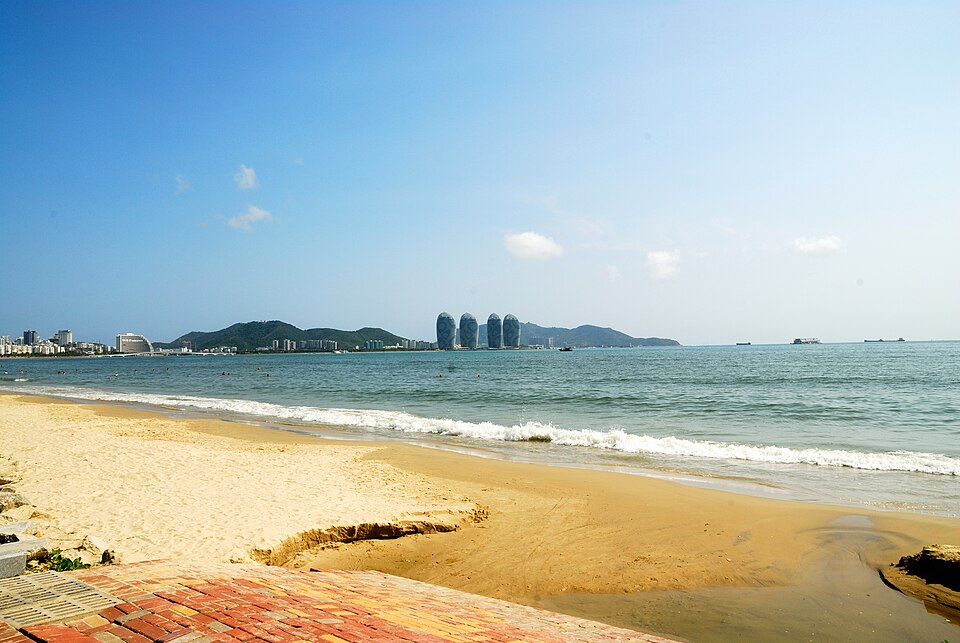
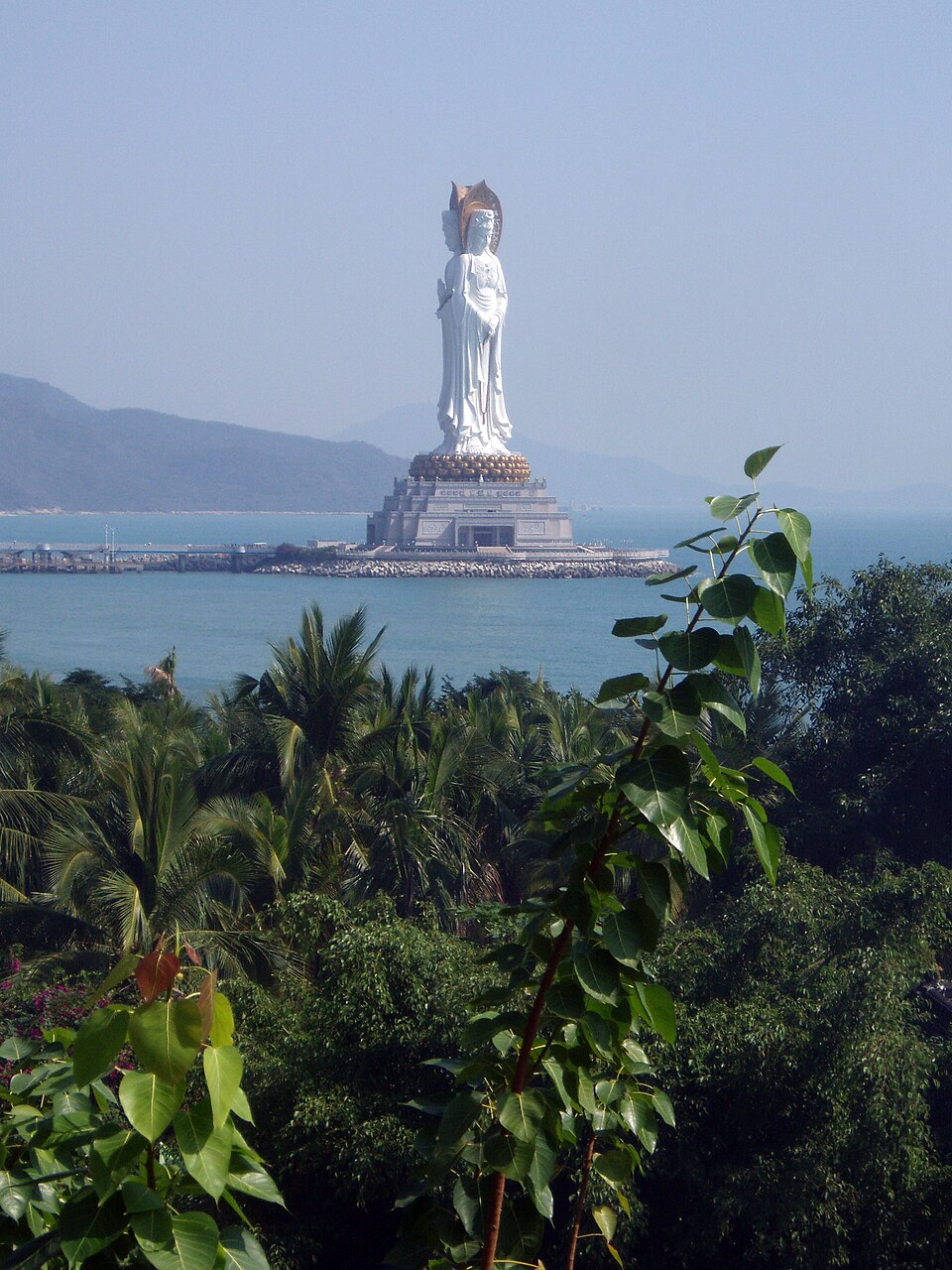
Tourism arrived in the late 1980s and has not slowed. The Nanshan park opened in 1988, and in 2007 Sanya was named the first stop of the Beijing Olympic torch relay in China. Luxury brands followed: a Mandarin Oriental in 2009, the first on the island, and China's first Atlantis in 2018. There are now over 100 hotels, plus Phoenix Island, built in the bay by hand and home to a seven-star resort, and the largest duty-free mall in China at Haitang Bay.
Since about 2020 the pressure has shown. Houhai, once a quiet surf village, now has tourists packed along its lanes, and Xiaodonghai filled up after COVID. By 2023 a private firm owned the Dadonghai seafront and was limiting who could use it. Yazhou had become very touristy by 2026. The government wants a free trade port here, and a second airport has been on hold since 2020 over environmental concerns.

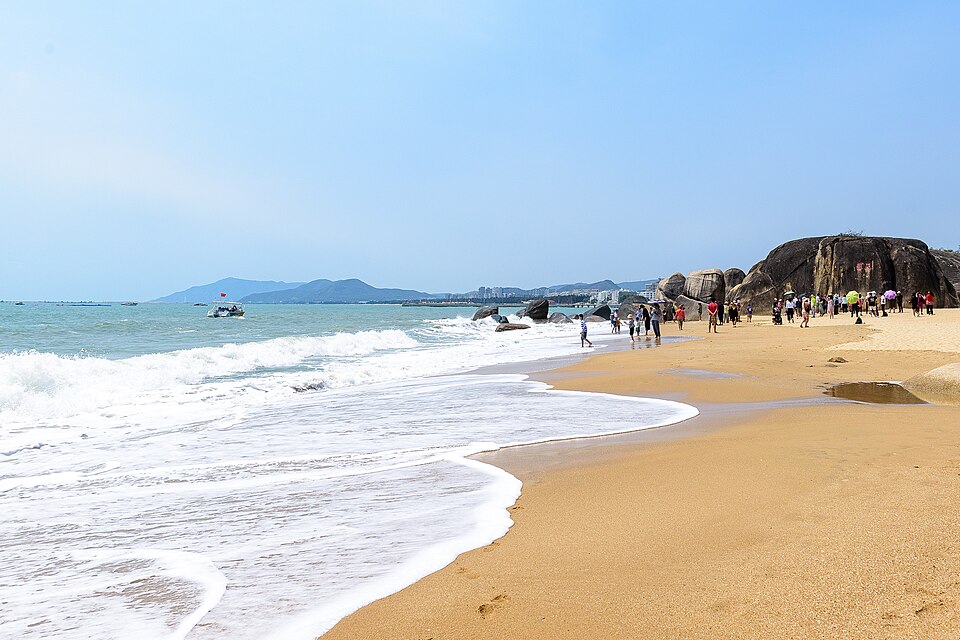
 Nature
 Nature
 Food
 Food













