
 Food
 Experience





Stone Forest
Bus from the East Bus Station, roughly two hours; the park is 70 km southeast · about 2 h
Erosion carved the park's stone pillars, and it is a UNESCO-listed site. Go early and you walk among them before the tour groups arrive.
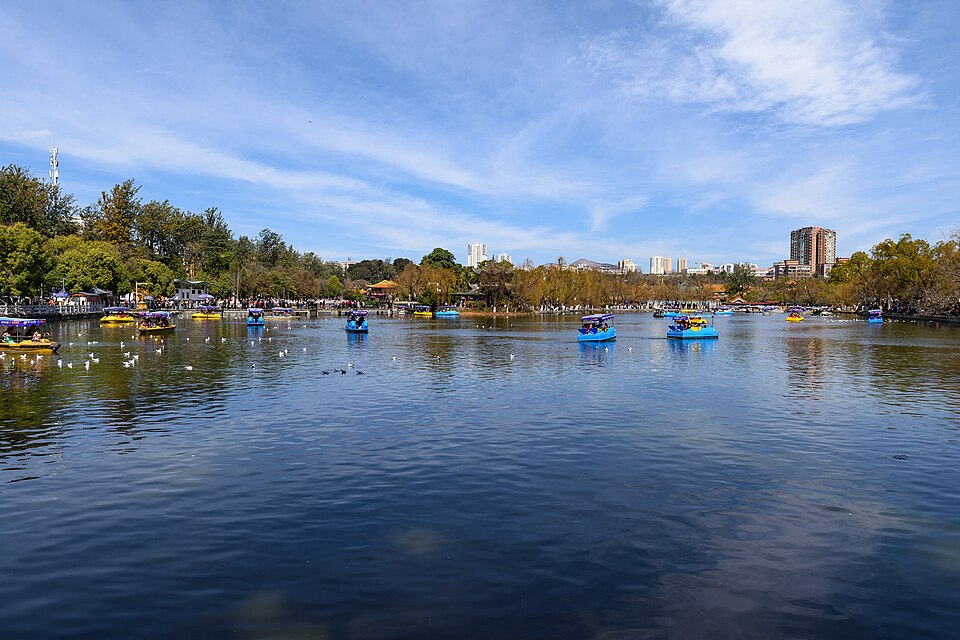
The story of the city
Kunming sits at an almost-tropical latitude but 2,000 m up, so the climate is very temperate. China calls it the City of Eternal Spring. It has 8.7 million people, and most visitors use it as the jumping-off point for Dali, Lijiang and the rest of Yunnan.
Most people treat Kunming as a base for the rest of Yunnan, so a short stop is normal. The Stone Forest is the one trip that works as a day out from the city.
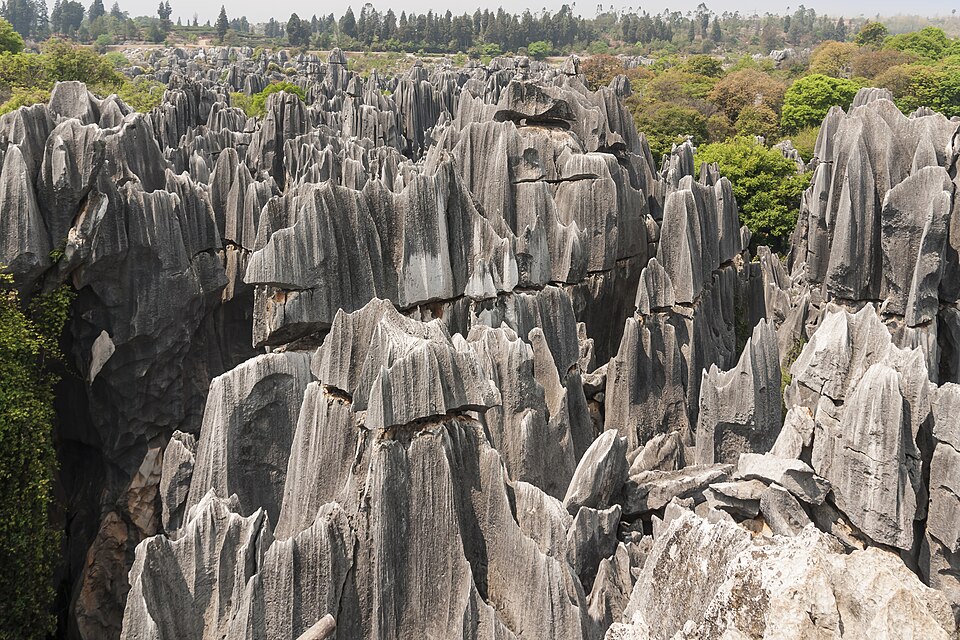 NatureStone ForestErosion has carved a national park of stone pillars about 70 km southeast of the city, on the land of the Yi people, and UNESCO lists it. Arrive when the gates open, usually at 08:00, to get ahead of the tour groups, and wear shoes for several kilometres of stone paths.4.7(18.9K)
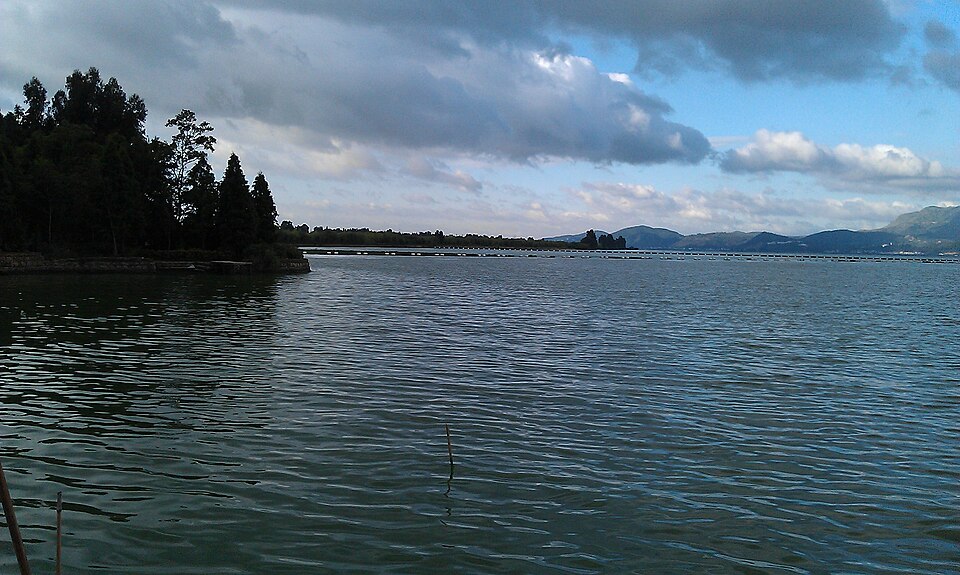 NatureDianchi LakeThe plateau lake south of the city is 40 km long, 8 km wide and 1,886 m above sea level. Wetland was turned into farmland in the 1960s and the water suffered, and a clean-up has run since the 1990s. Walk the shore at Haigeng Park for the view across to the Western Mountains.4.7(10.7K)
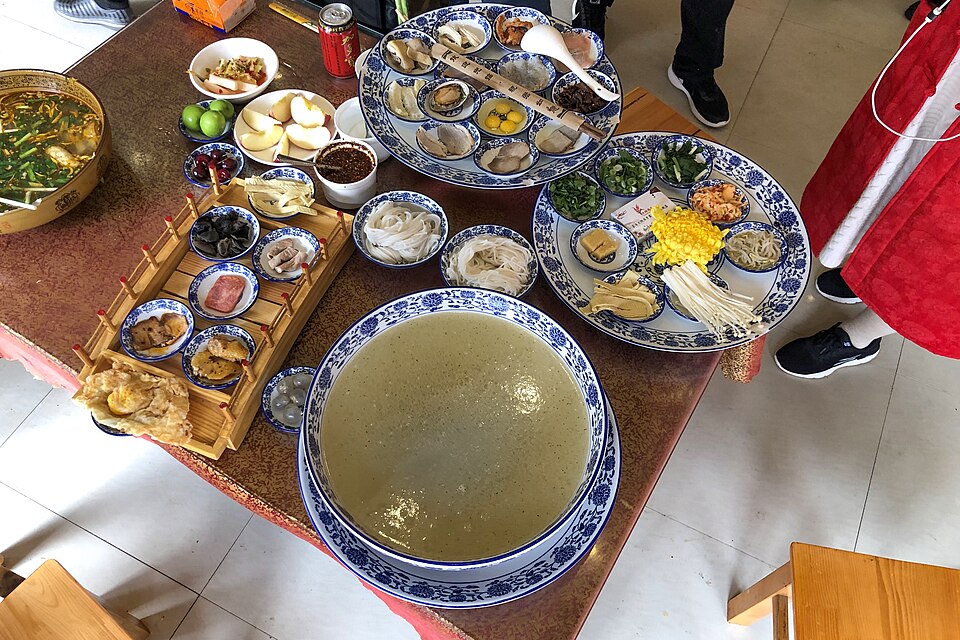 FoodOver-the-bridge rice noodlesA bowl of chicken soup arrives with a thick layer of oil on top that keeps it boiling hot. You add the raw meat first so it cooks in the soup, then the vegetables, then the noodles. Let the soup cool before you drink it.
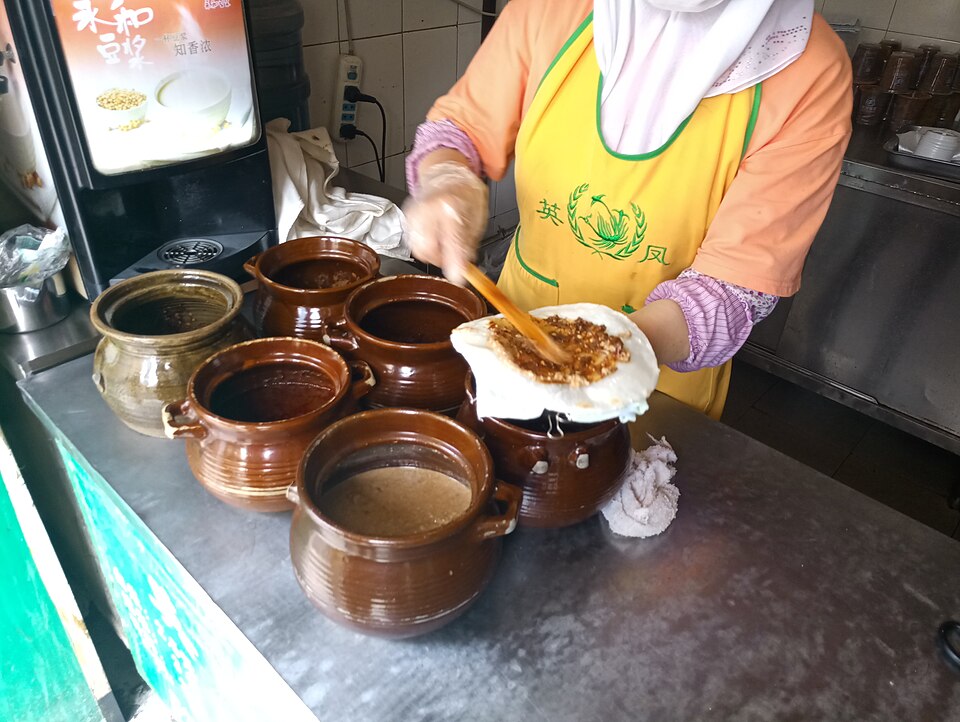 FoodEr kuaiThis chewy rice cake is made from steamed rice that is pounded and kneaded. It is sliced and stir-fried with chilli sauce and pork, or cut into noodles, or rolled into a pancake around a fried dough stick. The pancake version is a street snack you will want twice.
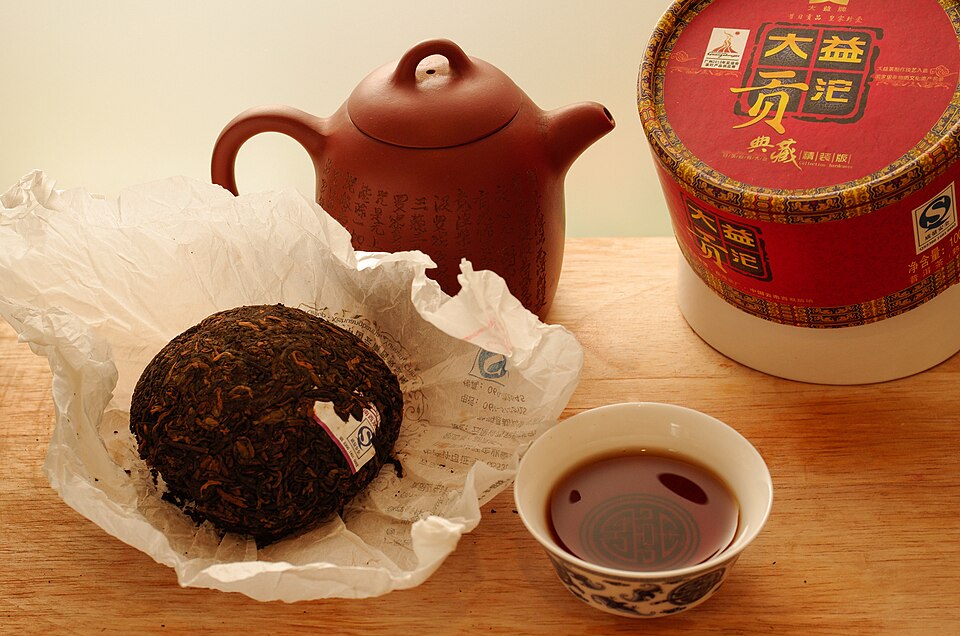 DrinkPu'er teaPu'er is grown in southern Yunnan, but Kunming is where much of it is aged, traded and auctioned. If you buy at the Flower and Bird Market, taste before you pay and haggle. Very cheap tea can be poor quality.
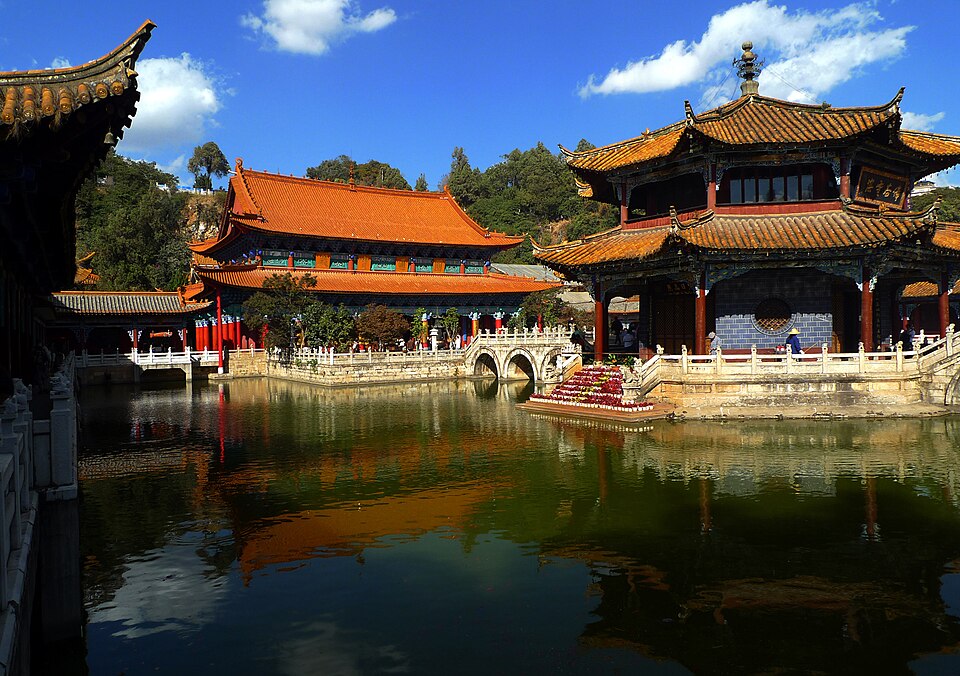 SightYuantong TempleKing Yimouxun of Nanzhao built it in the late eighth century, and it is the main Buddhist temple in Yunnan. You enter from above and walk down to a hall in the middle of a pond. It is a working temple, so you will see people praying and studying scriptures.4.8(102)
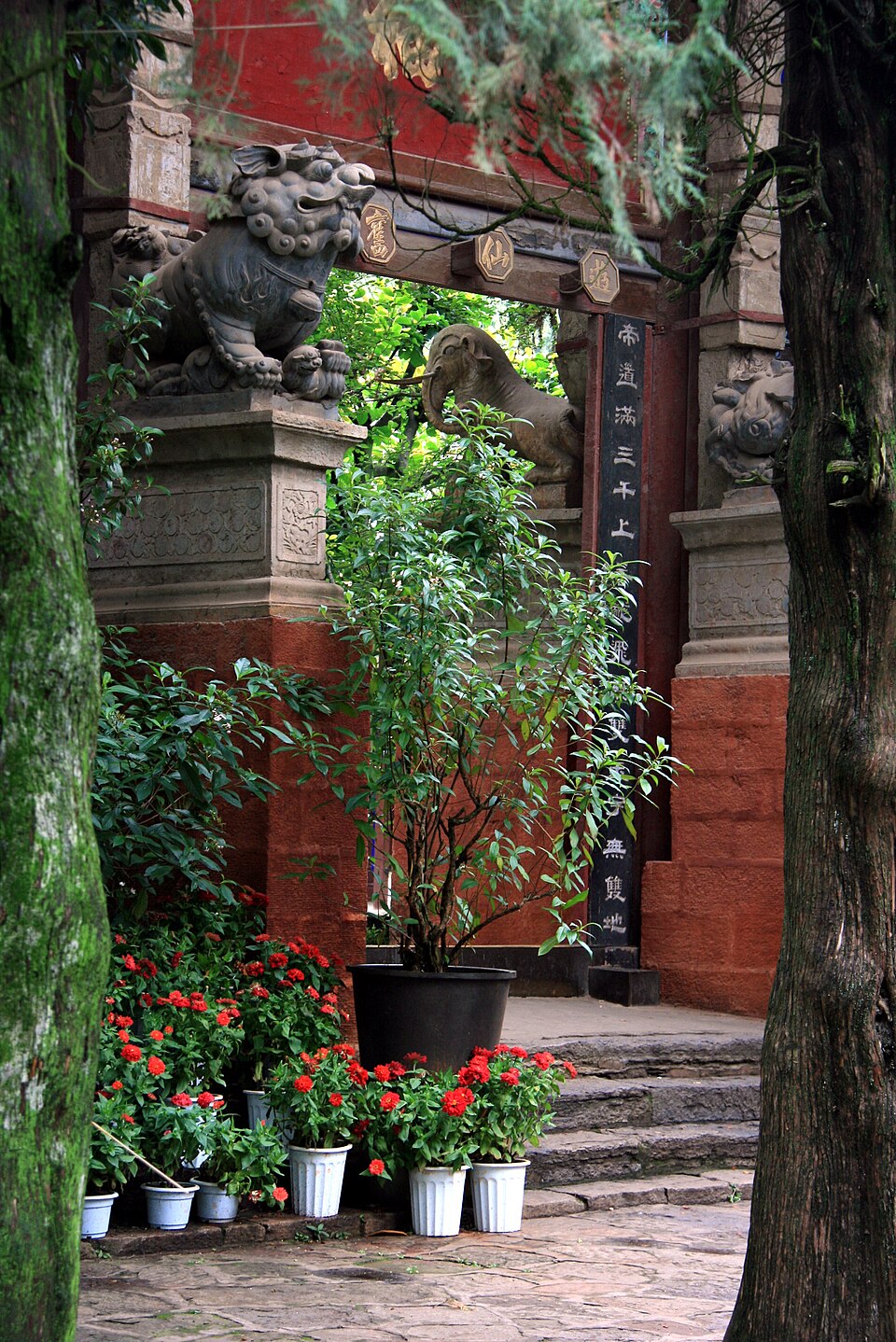 SightGolden TempleA bronze hall on Mingfeng Mountain, 6.7 m high and cast from 250 tons of bronze, said to be the largest of its kind in China. It dates from the Ming dynasty. The park around it is free to enter.4.6(229)ExperienceBlack-headed gulls at Green LakeThrough the winter months, migrating Siberian black-headed gulls gather on Green Lake by the thousand, and locals feed them in the morning. Buy the official bird food, not bread. The same paths fill with people doing their morning exercises.4.7(3.5K)
People lived around Dian Lake from Neolithic times, and a Dian Kingdom grew up there. The Han dynasty took it in 109 BC. They wanted the Southern Silk Road to Burma and India, and Kunming sat on the caravan route that carried goods towards South and Southeast Asia.
The city proper starts in 765, when the Kingdom of Nanzhao founded a town called Tuodong. The same kingdom built Yuantong Temple in the late eighth century. The old name survives on Tuodong Road, where the city's largest Taoist temple stands.
Yuan armies took the region in 1252 and 1253. Their governor, Shams al-Din Omar, founded a new city where Kunming stands today. He ordered temples for Buddhists and for Confucians, and two mosques. The Confucian school was the first in Yunnan and drew students from minority groups across the province. Scholars think this is the city Marco Polo described, where people used cowries as money. The area was first called Kunming as the Yuan declined.
The Ming built a wall around the city. In the late 1600s the general Wu Sangui ruled Yunnan and Guizhou from here, and his grandson held out against Qing forces for two months after Wu died in 1678. By 1832 the city had real structures inside its walls, and it went on to become the region's main market and transport centre. An earthquake in 1833 displaced many residents, and the Panthay Rebellion of 1856 left most of the Buddhist sites damaged, turned into mosques or razed.
Then the French arrived. They built a metre-gauge railway from Kunming to Haiphong in French Indochina, designed to move Yunnan's minerals to their colonies. Many labourers who rose against the working conditions were executed. Kunming opened as a treaty port in 1908, and the line was done by around 1911. The Yunnan Railway Museum at the old North Station now keeps the maps and locomotives. Water from the Green Lake pump house began flowing through the city's pipes in 1918, and the two pumps there appear to be the French originals.
The war with Japan changed the city more than anything before it. Refugees came from the north and the coast, carrying dismantled factories that they rebuilt out of reach of the bombers, and universities moved here too. Peking, Tsinghua and Nankai universities merged into one wartime university that taught in Kunming from 1938, on a site that is now part of Yunnan Normal University. Kunming was the end of the Burma Road, and after that road fell it was the end of the air route over the Himalayas known as the Hump. The Flying Tigers were based here to defend it. A Burma Road museum and a Flying Tigers memorial now cover that story.
Kunming was a walled city until 1952, when hundreds of young people were ordered to tear down the wall and use the bricks for a new road, Qingnian Lu, which means Youth Road. Names like Beimen Jie, North Gate Street, still mark where the gates stood. Until Mao Zedong died, much of China saw Kunming as a remote frontier, and the government sent people who had fallen out of favour there. The city centre was rebuilt in the 1980s and 1990s, with Swiss help, ahead of the 1999 World Horticultural Exposition. The garden built for it is still in use.
Less formal restaurants often put a shared bamboo water pipe and tobacco out for diners. After dark, vendors light charcoal grills on the street for skewers of potato, pork, chicken and beef, dusted with local chilli powder. Goat's cheese, or rubing, is fried and sold on the street, sometimes with sugar and sometimes with salt and pepper.
The day starts outdoors. Early in the morning Green Lake fills with people doing their exercises, and at the zoo locals use the paths for exercise or play cards and mahjong. The night ends late. Clubs on Kundu Bar Street stay open until 05:30 or 06:00. Wenlin Street has 20 to 30 small lounges and bars that locals and students use.
Yunnan has many ethnic groups, and the Yi are prevalent in and around Kunming. At popular sites people in Yi dress sell handicrafts or show off local dances. The city also has several opera troupes and a local lantern dance called huadeng. Indoor performances are rare, but there are often informal shows at weekends outside the Workers' Cultural Hall and in Green Lake Park. Go players know Kunming for its Yunnan stones, which are cheaper than Japanese ones.
Kunming speaks its own dialect, close to the speech of Sichuan and Guizhou. Fish is pronounced yi rather than yu, and street is gai rather than jie. The dialect is fading as Mandarin spreads, but older residents still use it. A strong Kunming accent in Mandarin is called Mapu.
The temperature stays mild. In January the average high is 16.3 °C and the low is 4 °C. In June it is 25.4 °C and 17.3 °C. Winter days are pleasant, but it can snow between December and February, and when it rains it feels cold, so pack warm layers. The altitude makes the sun strong even on cloudy days, so bring sunscreen, a hat and sunglasses.
Rain is what separates the seasons. June brings 173 mm, July 216 mm and August 196 mm, and September still gets 119 mm, while December gets 14 mm and February 12 mm. June to September is the wet season. December to March is the driest stretch.
Go in March or April, or in the weeks around November. April has a high of 24.3 °C and only 25 mm of rain, and jacaranda trees bloom across the city from late April into May. In November the gulls return to Green Lake, with highs of 18.7 °C and 30 mm of rain. October is a fair second choice at 21.1 °C, though it gets 82 mm.
Best months: Apr–May, Oct
Green Lake Park is small, with goldfish and lotus, and musicians sometimes practise along its paths. Yunnan University is nearby, and the Wenlin Street bars and restaurants are close to its northern edge. Yuantong Temple sits below Yuantong Hill in the north of the city, and the Yunnan Military Academy is by the park's west gate. It suits a slow day on foot.
The entertainment district centres on Kundu Square, with cinemas, bars, clubs and restaurants. Elsewhere in the centre, the Jingxing Street flower and bird market sells puppies, crickets, birds and tortoises, along with flowers and trinkets. The Flying Tigers Memorial is by Dongfeng Square station. It suits you if you want to eat late and see where the city's nightlife is.
Xishan covers the west shore of Dianchi Lake. Yunnan Nationalities Village is an ethnographic display of how Yunnan's minority peoples build and live. From Haigeng Park an open-air chairlift crosses the lake to the Western Mountains, which have a forest reserve and the Dragon Gate cut into the rock from 1781. Daguan Pavilion and the Burma Road History Museum are also in this district.
Guandu Ancient Town dates to the Tang dynasty and is known for its snacks, led by the Four Great Snacks of Guandu. Go on a weekday, because weekends are very crowded. The Yunnan Provincial Museum is also here, with artefacts from the past 2,500 years. It is free, closed on Mondays, and you should bring your passport.
In Panlong District, about 12 km from the centre, lie the Kunming Botanical Gardens, which hold some 4,000 plant species, and Black Dragon Pool Park next door. The World Horti-Expo Garden, left from 1999, is popular for wedding photos. Tanhua Temple, built in 1634, is known for its flowers. It suits you if you prefer gardens to museums.
Bus from the East Bus Station, roughly two hours; the park is 70 km southeast · about 2 h
Erosion carved the park's stone pillars, and it is a UNESCO-listed site. Go early and you walk among them before the tour groups arrive.
About 65 km east in a straight line, so check bus times locally
A karst area about 65 km east of the city with around a hundred caves. The tour includes a boat ride through the underground caves, where it stays cool all year, so take a light jacket.
Bus from the South Bus Station to Chengjiang, about an hour, then local transport to the lake · about 60 min
One of the deepest and cleanest lakes in China, with a beach where you can camp. It works as a day trip.
Regular buses from Kunming's West Bus Terminal, about 75 km away
A national park with more than 70 full dinosaur skeletons found in the area, and plenty for children to do. A half-day is enough.
34 km from the city; ask locally for the bus
Hot springs 34 km from the city, if you want to soak.
High-speed train, about 2 hours to Dali and 3.5 to Lijiang · about 2 h · worth a night
Two old towns to the northwest that are very popular with domestic and foreign visitors. Lijiang is much further than Dali.
UK advice: No warnings
US advice: Level 2, exercise increased caution
Type A, C, I · 220 V
Bring an adapter unless your plugs are type A or C or I.
renminbi (CNY)€1 = 7.31 CNY · $1 = 6.67 CNY
Tipping: Tipping isn't expected; upscale restaurants and hotels may add a service charge
Kunming Changshui International AirportKMG
Traffic drives on the right.
SIM and eSIM: China Mobile, China Unicom, China Telecom
Country calling code +86.
Spoken officially: Putonghua








