
 Nature
 Food
 Experience





Yangshuo
Bus, about 1.5 hours, or the Li River cruise. · about 1.5 h
A town downstream among the same karst hills, where the river cruise ends. It used to be a backpacker favourite and now has many Chinese tourists.
The story of the city
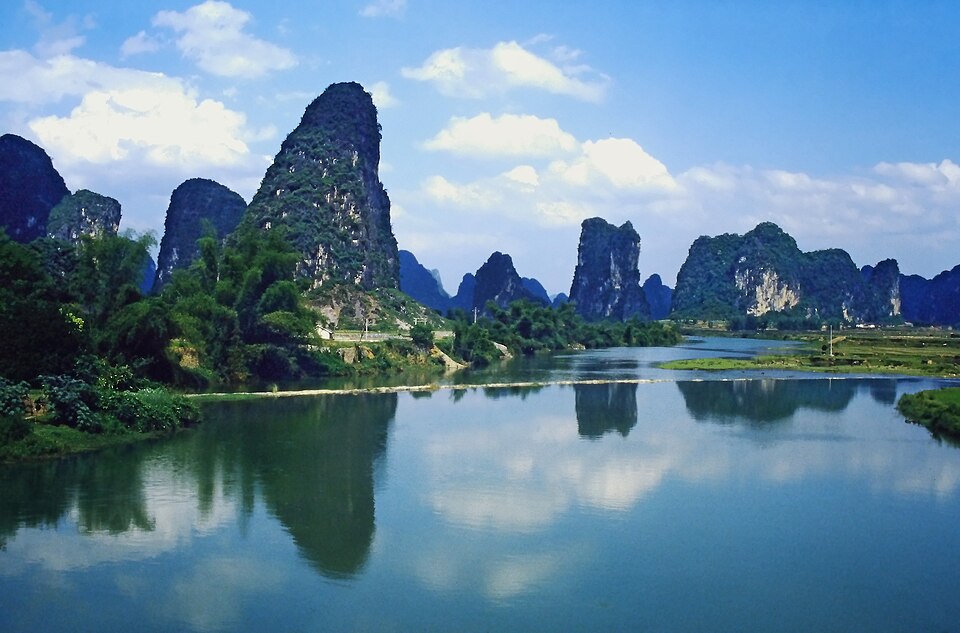
Guilin is a Chinese city of nearly five million people in its wider area, with limestone peaks standing among the streets and two rivers and four lakes looping around the centre. It suits anyone who wants karst scenery, caves and river trips more than museums. It also works as a base for the Li River, Yangshuo and the rice terraces at Longsheng.
Give the Li River boat trip a full day. Stay longer if you plan to go on to Yangshuo or Longsheng.
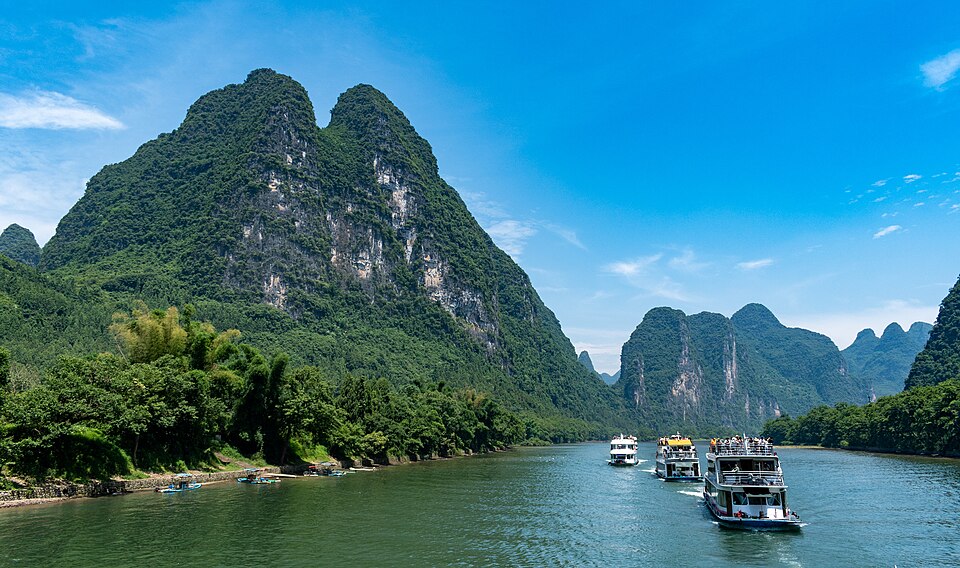 NatureLi RiverThe river runs 83 km from Guilin to Yangshuo between limestone peaks, and one of its views is printed on the back of the 20 yuan note. Boats leave from Zhujiang Pier. The run to Yangshuo takes 3.5 to 4 hours and the shorter one to Xingping about 3, so choose by how much of the day you want to spend on deck.4.6(16.5K)
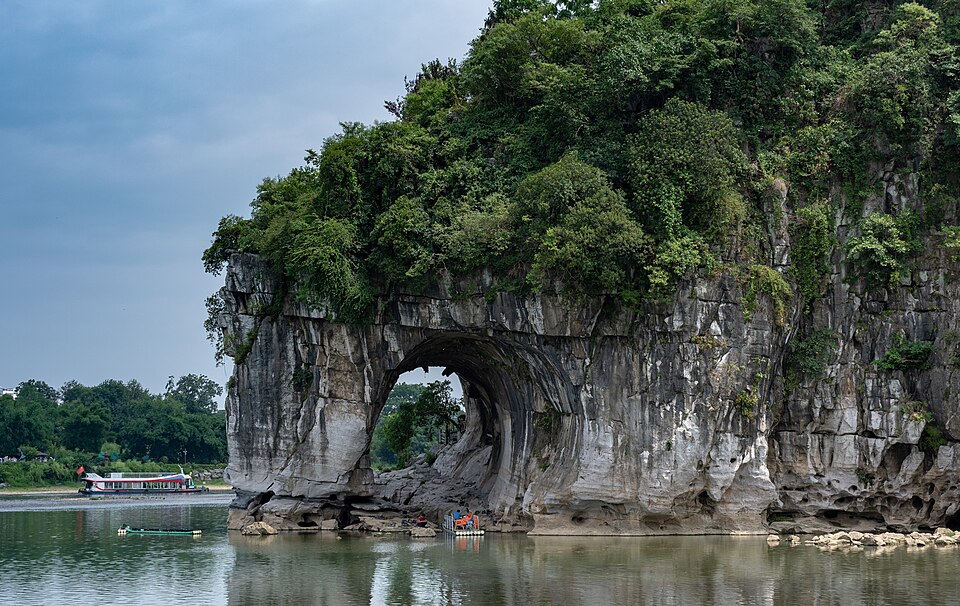 SightElephant Trunk HillA hill on the Li River with a natural arch that looks like an elephant dipping its trunk in the water. The image stands for the city. Trees now block the view from the bank, so a boat ride is the way to see the arch properly.4.6(25.8K)
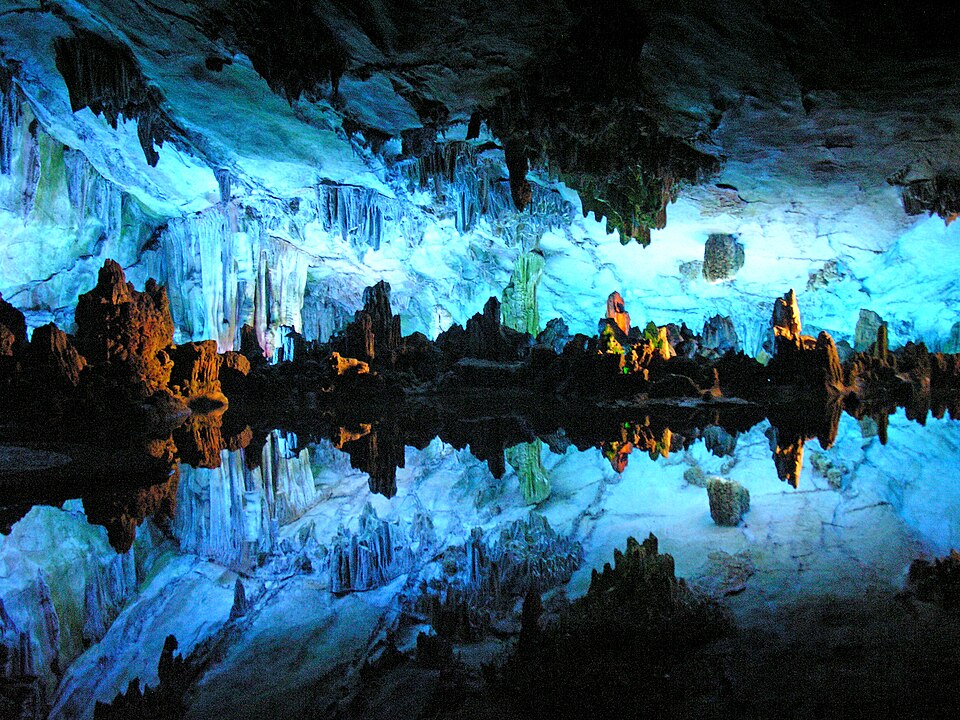 SightReed Flute CaveA limestone cave with stalactites and stalagmites under artificial light, reached by bus 3 from town, about 5 km west of the centre. A guide leads groups past formations said to look like lions, monkeys and the Guilin skyline. Walk up on the raised path beside the hill instead of the road, and you avoid the hawkers.4.6(12.3K)
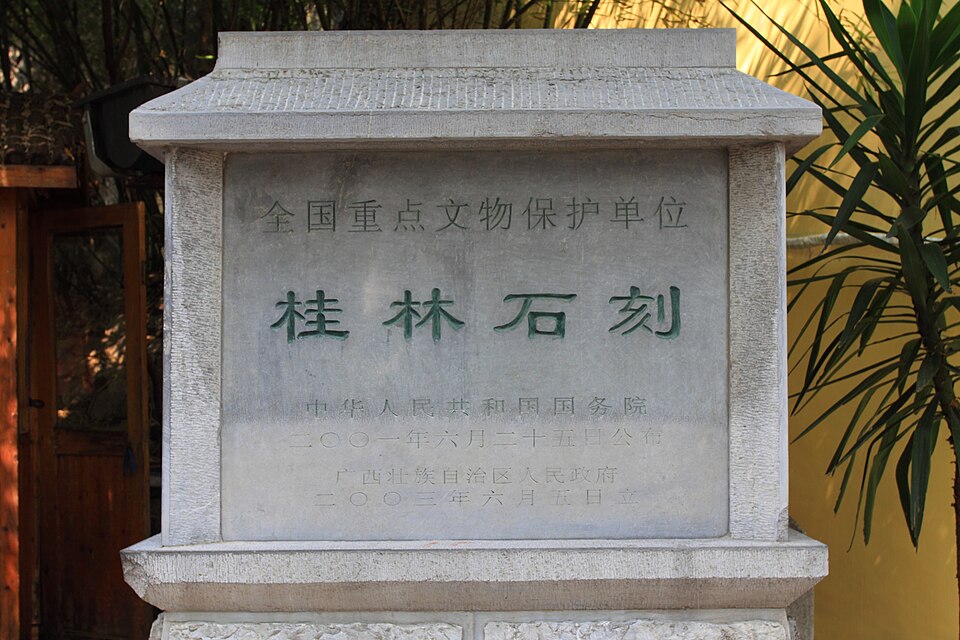 SightSolitary Beauty Peak and the Princes' CityThe Princes' City is a walled Ming palace complex in the middle of town, where only the walls and some foundations are original. A carved stairway starts there and climbs Solitary Beauty Peak, which has views over the city and the hills around it.4.9(25.3K)
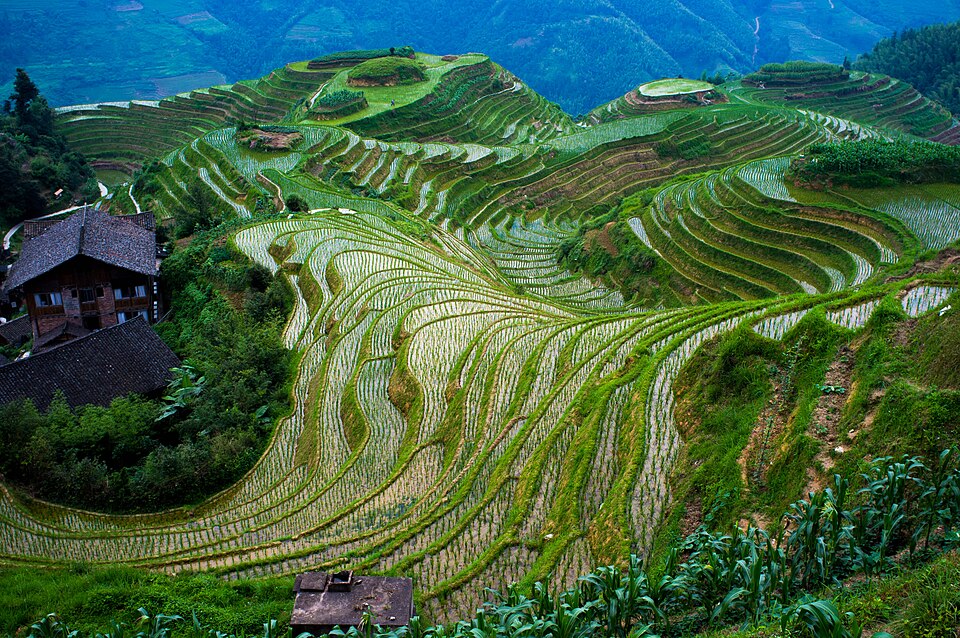 NatureLongji rice terracesHills at Longsheng, near the city, are cut into terraced rice fields, and tours often include visits to nearby Zhuang villages.4.5(8.5K)
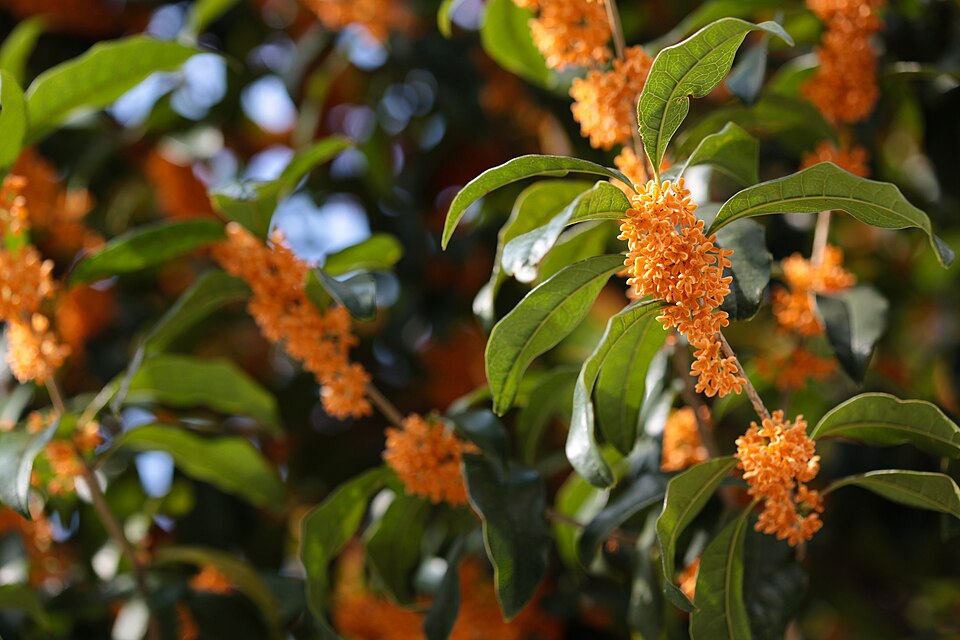 DrinkOsmanthus and Liquan beerThe Chinese word gui in the city's name now mostly means sweet osmanthus, which is widely grown here and is the official city flower. Osmanthus tea and Liquan beer are the two local drinks.
People lived in the caves here thousands of years before there was a city. At Zengpiyan, a Neolithic cave site found in 1965, thousands of stone tools and pottery pieces have come out of the ground. The Baiyue peoples settled the area before the Qin, and a small settlement stood on the Li River by 314 BC. In 214 BC the Qin dynasty set up the Guilin Commandery after conquering the south. Its name means Cassia Grove, after a spice from the far south that, oddly, does not grow around Guilin.
Geography made the place matter. The Nan Mountains cut Guangxi off from the Yangtze basin, and around the 3rd century BC a canal was dug so small boats could pass from the Yangtze system to the Xi River. In 111 BC the Han dynasty founded Shi'an County, which counts as the start of the city. Under the Tang and Song it grew into the link between the capital and the southwest border, with troops stationed here and canals bringing grain from the Yangtze plain. You can still read that era on stone: Fubo Hill carries Tang carvings, and the Guihai Stele Forest holds 213 steles from the Tang to the early 20th century.
The city's names changed with its rulers. It became Guizhou in 507, then Jingjiang Prefecture in 1133, and took the name Guilin Prefecture in 1367. Under the Ming a garrison was set up here and farmland spread across the surrounding area. The Ming princes built a palace in the centre, and its walls still stand in the middle of the city today.
In the 20th century Guilin was a political centre. Sun Yat-sen made it one of the headquarters of his Northern Expeditionary Army in 1921. It was the capital of Guangxi before 1912 and again from 1936 to 1949. Li Zongren, a Guilin-born Kuomintang general, was vice president from 1948 and acting president in 1949 and 1950. His residence from the 1940s is now a free museum with exhibitions about his life.
The war with Japan changed the city most. Refugees poured in from across China, and the population grew from 70,000 before the war to more than 500,000 by 1944. Writers and artists such as Guo Moruo, Ba Jin and Xu Beihong lived here. The Eighth Route Army kept an office from 1938 to 1941, and American volunteer pilots, the Flying Tigers, flew from Yangtang airfield from 1941. Both are now museums, and the pilots' command post cave can be visited. The city was utterly destroyed during the war.
After 1949 Guilin lost its status as capital. In 1950 Guangxi's government moved to Nanning, and Guilin is now the province's third largest city. Factories for paper, chemicals and farm equipment brought the population back, though some have since moved away. In 1981 the State Council put Guilin on a short list with Beijing, Hangzhou and Suzhou, cities where protecting heritage and scenery should come first. Tourism is now the main industry, and the city is cleaner than other Chinese cities.
Guilin cooking mixes Cantonese and Zhuang influences, and it leans on spice, chilli above all. Besides noodles you will find steamed rice stuffed with mung bean paste, sweet tofu scented with flowers and drunk through a straw from a bag, and zongzi, glutinous rice dumplings wrapped in leaves. Fenli, a fried rice paste dish, appears mainly in winter.
The Zhuang people have their own autonomous region in Guangxi rather than a standard province, and the Guilin area has 12 minority groups besides the Han. In the 2010 census the Han made up about 85 percent of the prefecture, the Yao about 8 and the Zhuang about 5. People in the urban area speak a Mandarin dialect, and Pinghua is common in the suburbs. Zhuang is co-official with Mandarin in the region. English is thin outside hotels, hostels and tourist shops, so have your hotel write your destination in Chinese for taxis.
Evenings are public. At 20:30 Central Square switches on an artificial waterfall over a giant ground atlas, and a street market sets up along Zhongshan Road selling souvenirs. Dreaming on Li River, a dance and music show at 20:00, tries to present the cultures of the ethnic groups around Guilin. For a drink, four bars sit along Chuanshan South Road, where the crowd is young and often students, and a club called Logo is near Guangxi Normal University.
The scenery has fed Chinese art for centuries. The Song scholar Fan Chengda, who painted the hills and sent pictures home to friends who did not believe them, is credited with the saying that puts Guilin's landscape first under heaven. During the war the city hosted writers and painters. When you eat out, skip the crowded restaurants on Jiefang Road and along the river, which are often overpriced chains or tourist traps. Side streets are better, and the Ximen Bridge area has many Muslim restaurants.
Guilin has a humid subtropical climate. Winters are brief and mild, while summers drag on hot and sticky. January is the coolest month, with highs of 11.7 °C and lows of 6.1 °C. July is the hottest, with highs of 32.8 °C and lows of 25.2 °C. Rain totals nearly 1,890 mm a year.
Spring is the wet end of the year. About half the rain falls from April to June, in the plum rains, and floods are a risk. June alone gets 448.7 mm. March is the cloudiest month, with only 14 percent of possible sunshine. The Longsheng fields are flooded in June and September.
Autumn is the time to go. Skies are sunny and dry, September has the highest share of sunshine, and October has the lowest rain of the year at 54.9 mm with highs of 26.3 °C. The Peach Blossom River area turns red with leaves in autumn.
Winter starts dry, then turns wetter and greyer. By February the rain has reached 83.9 mm a month, up from 54.1 mm in December. Days are mild, with highs of 14.9 °C in December. It suits you if you dislike heat, as long as you bring a rain jacket.
Best months: Oct–Nov
The central district holds Central Square, a 51,400 square metre open space, and the walled Princes' City, where the stairway up Solitary Beauty Peak starts. Yiren Road on the square's north side has everything from buffet canteens to trendy cafes.
The district on the Li River's bank holds Elephant Trunk Hill in Xiangshan Park, within walking distance of the centre. Nearby on Wenming Road are Li Zongren's residence and the Sun and Moon Pagodas, which have little inside but look better at night over their lake. Zengpiyan, the Neolithic cave site, is also in this district.
A northern district with Diecai Mountain, a park around several peaks, each reached by stone stairs. It also has the Eighth Route Army Guilin Office Museum on Zhongshan North Road, under 1 km north of the Princes' City, and the museum is closed Mondays.
Seven Star Park lies on the city's east side, 15 to 20 minutes on foot from the main pedestrian area. It has giant and red pandas in a small zoo, Seven Star Cave for an extra fee, and the Guihai Stele Forest. The Crescent Moon Building inside the park is known for its nun noodles.
Chuanshan South Road, near the Li River bridge, has four neighbouring bars with relaxed crowds, often students who speak English. It has Western food at Sharon's Coffee nearby.
A peaceful old town on the Li River, halfway between Guilin and Yangshuo, likely to draw the next backpacker crowd as Yangshuo gets more commercial. It suits you if you want the river landscape with less company. Many cruise boats end here.
Bus, about 1.5 hours, or the Li River cruise. · about 1.5 h
A town downstream among the same karst hills, where the river cruise ends. It used to be a backpacker favourite and now has many Chinese tourists.
Organised tours from Guilin.
Hills covered in terraced fields, with Zhuang villages nearby. Go in June or September, when the fields are flooded.
High-speed train to Sanjiang in 30 minutes, then a minibus.
A mountain area of minority villages with bridges and drum towers. It is quieter and less touristy than Longsheng.
Local bus from the City Bus Terminal near the train station. · about 30 min
A riverside town more than 1,000 years old, with a 2 km bluestone street of well-kept old buildings, a long bridge and several temples. Nearby is Gudong Scenic Area, which has a waterfall.
Long distance bus, about 45 minutes, then monorail or jeep to the entrance. · about 45 min
A cave with 3 km open to visitors, a waterfall inside and a monorail through its largest section. You can leave by boat to the Li River bank.
UK advice: No warnings
US advice: Level 2, exercise increased caution
Type A, C, I · 220 V
Bring an adapter unless your plugs are type A or C or I.
renminbi (CNY)€1 = 7.31 CNY · $1 = 6.67 CNY
Guilin Liangjiang International AirportKWL
Traffic drives on the right.
SIM and eSIM: China Mobile, China Unicom, China Telecom
Country calling code +86.
Spoken officially: Chinese, Zhuang








